
Toddlers & Independence: Why “I Do It Myself” Matters

Picture this: You are ready to leave the house in the morning, and there sits your toddler who insists on putting on their shoes by themself. They vehemently refuse any help that is offered as you watch them fumble the straps time and time again. It would be easy to jump in, taking mere moments to accomplish the task and head out the door. But this adult-imposed urgency fails to recognize and respect the self-construction occurring in this moment. Your toddler is not just putting on shoes; they are learning how to problem-solve, persevere, and trust their own abilities. They are developing independence.
In the Montessori approach, we believe that independence is one of the greatest gifts we can give to a child. It is a fundamental principle that shapes every aspect of the methodology and is the foundation for all future human development. And it begins much earlier than most people realize.
Independence is not a skill that appears suddenly when a child reaches a certain milestone. Rather, it develops gradually, through countless small experiences beginning in infancy. Maria Montessori observed that children possess a natural drive toward independence which is further supported by a secure attachment to their caregivers. When adults are responsive, caring, and consistent, the child feels safe to wander away from them to explore the environment. Further, the child trusts that any experimentation or mistakes will be met with patience, respect, and love. The adult’s role is to adamantly believe in the child’s capabilities, provide appropriate tools and opportunities to use them, and remove obstacles inhibiting their ability to succeed.
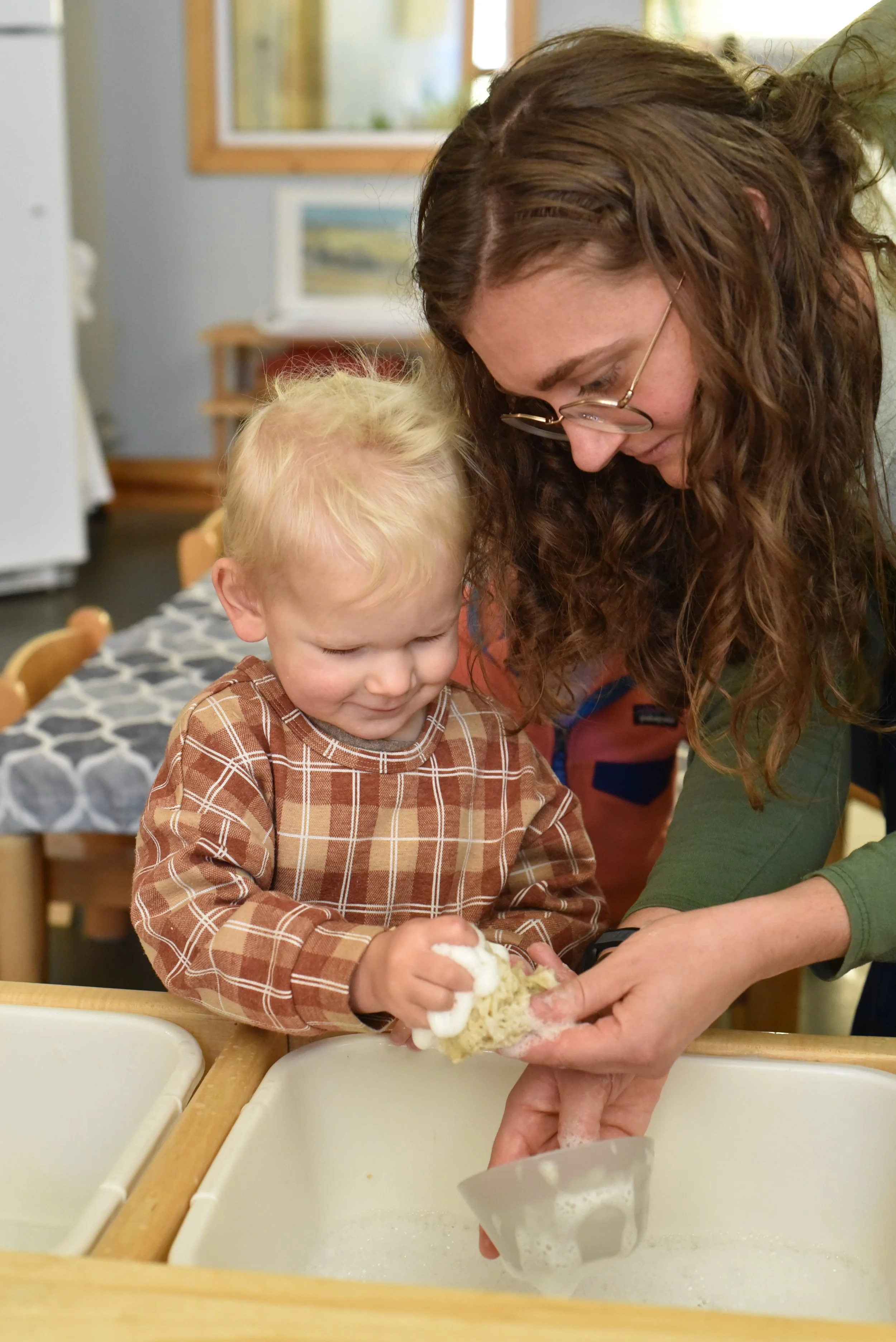
Any parent knows that toddlers love to be involved in the acts of daily life. They are strongly motivated to help, toddling close behind the adult, imitating their movements. However, in a world that is not built for the young child, the question becomes “how can we adapt this activity to make it accessible for them?” In the home, this may look like adding a low hook in the entryway for them to hang their coat on, supplying a step stool so they can access the sink, letting them unload groceries one item at a time, or handing them clothes to throw in the washing machine. The goal is not efficiency - it is to include them in the process. In doing so, the child learns that they are valued, thus emboldening them to take ownership of themselves and the environment.
A common misconception is that, in the Montessori classroom, children are free to do whatever they want. In reality, independence is developed within clear, predictable limits. Children are free to choose from appropriate activities, participate in daily routines, navigate the space with purpose, and repeat work until satisfied as long as their behaviors are not destructive, disruptive, or dangerous. Young children learn how to use materials carefully, clean up after themselves, respect others’ concentration, and care for shared spaces. Now, this does not mean the environment is always pristine. In fact, if you have had the opportunity to observe in a toddler classroom, you know that the floors are always wet, paint is smeared on surfaces, tables are sticky from food prep, and sometimes work gets abandoned half-finished. We do not expect the children to perform tasks such as mopping, sweeping, and tidying with the precision of adults. But we do expect them to care for the environment to the best of their ability, which looks different depending on the child. With repetition, the children’s confidence grows, and they begin to refine and master these skills. And what we see is a beautiful dance unfolding as each member of the community takes initiative. A child carrying a sloshing bucket of water is followed closely by another mopping furiously behind them. An older child helps a younger toddler put on their coat. Children remind each other to take their work to a table or bring each other work rugs. Believe it or not, toddlers become giddy at the mention of folding laundry or loading the dishwasher!
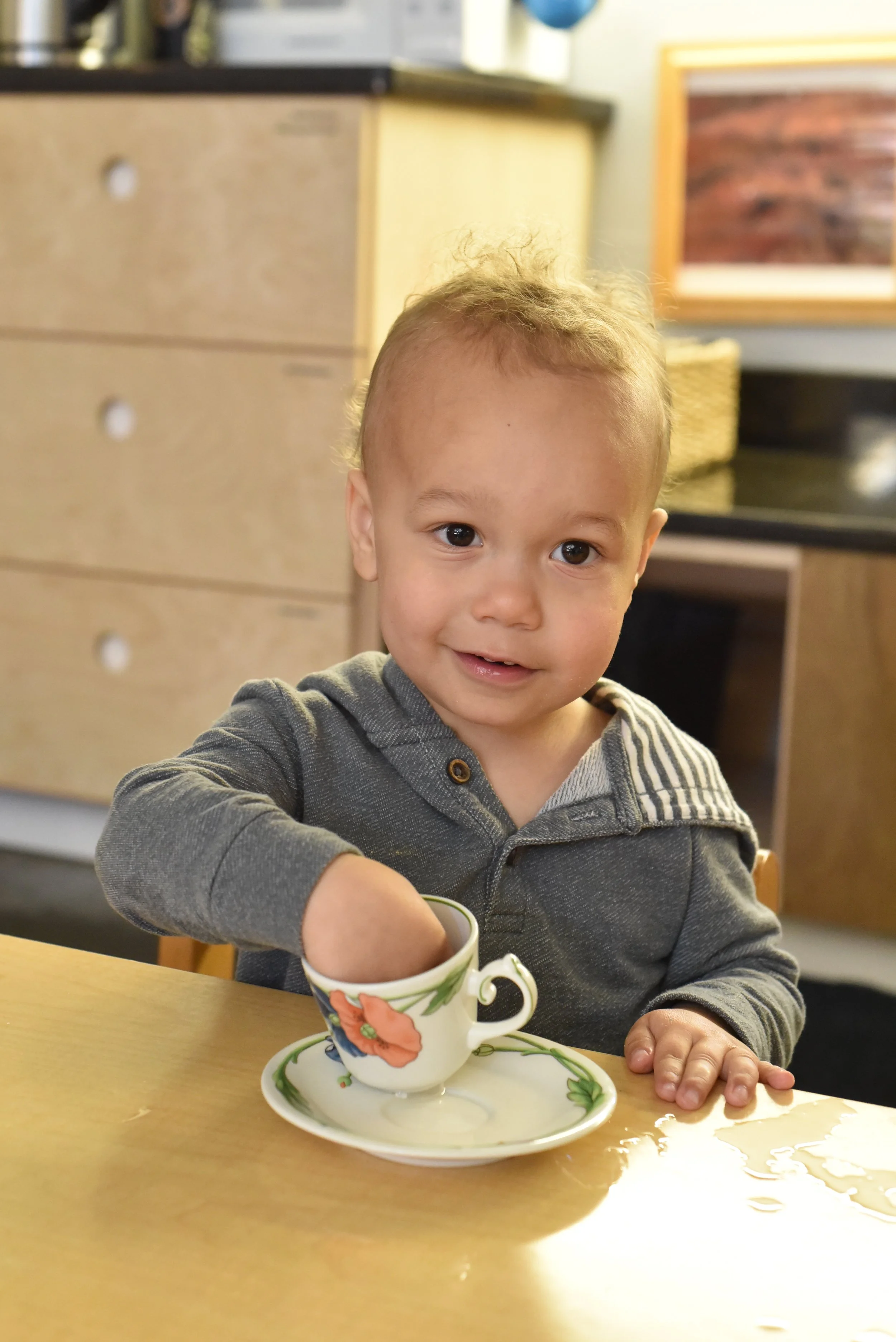
All of this happens because we believe that every child can. Our belief in them bolsters their belief in themselves. Ample opportunities to work independently empower the children as they come to learn that ‘I can do it for myself. I can do it for others. I can do it for my environment. My contributions matter. I can transform the world around me with my work.’ These ideas form the underpinning of one’s self-esteem, resilience, executive functioning, and self-efficacy. Our goal as educators is to help young children become capable, confident people equipped with strategies to navigate challenges, explore curiosities, regulate their emotions, and think and act for themselves.
So, with this in mind, embrace the toddler’s struggles, for it is through the struggle that we grow! Provide support and encouragement without taking over their work. Observe and adapt routines to improve accessibility. And maybe, if you can, allot an extra 10 minutes for them to put on their shoes in the morning.
