Building Trust in the First Year: Attachment in the Nido
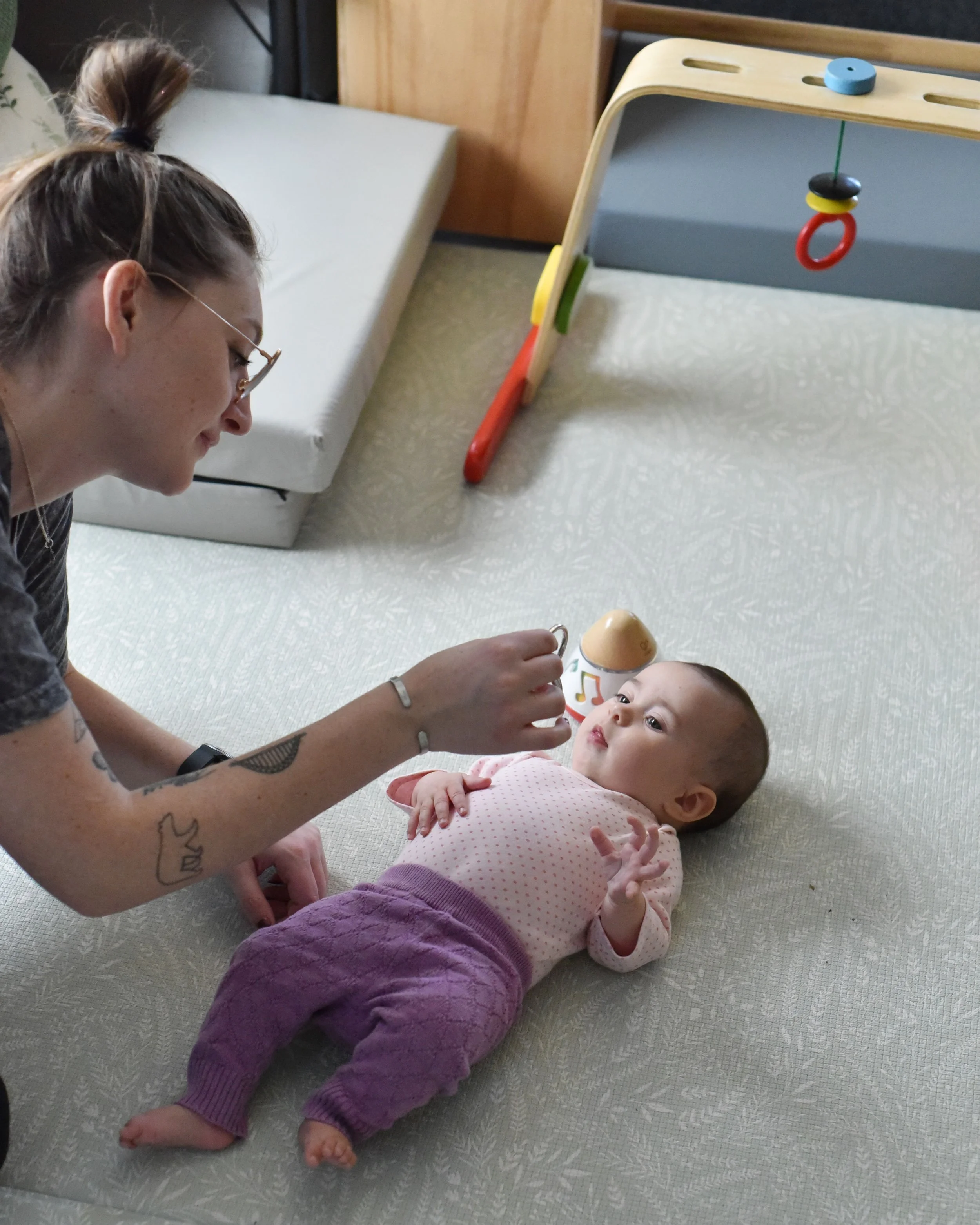
The Nido is an environment that is designed to provide an infant with a safe and predictable entrance into Montessori communities away from home. The routine of the day and consistency of the adults allows for babies to settle in and feel comfortable in a wholly new environment while learning that their needs will be met. This eventually leads to them feeling confident enough to explore their surroundings and move away from the adults to interact with the materials on the shelves. All of this development is essential to their work of self-construction.
Because we are so fortunate to have a consistent team in the Nido, we all get to learn each baby’s cues and establish trust within our relationships with them. In my training, we learned about building trust through the basic acts of holding, handling, and feeding the infants in the Nido. The way we interact with each child allows them to develop confidence that we will care for them which further develops their knowledge that the world is a safe place. Each child has different needs, and in the Nido we work to become attuned to the individual cues of every baby in our care.
Dr. Silvana Quattrocchi Montanaro was one of the foundational voices in the creation of the Montessori 0-3 training as it is known today. She created the theory of the two psychological legs. This theory has a bit in common with the more commonly known concept of Erik Erikson’s Psychosocial Developmental Stage One: Trust vs. Mistrust. Montanaro’s theory discusses how just as many people have two strong physical legs that support our physical body, the child is developing two psychological legs to support their psychological self.
The first psychological leg is “Trust in the World.” Infants are developing this trust every day as we respond to their cries and help them meet their needs. They develop attachments to their parents or other primary adults in their homes and then secondary attachments to other caregivers in their lives. From this basic trust in individual caregivers, babies learn that the world is a safe place.
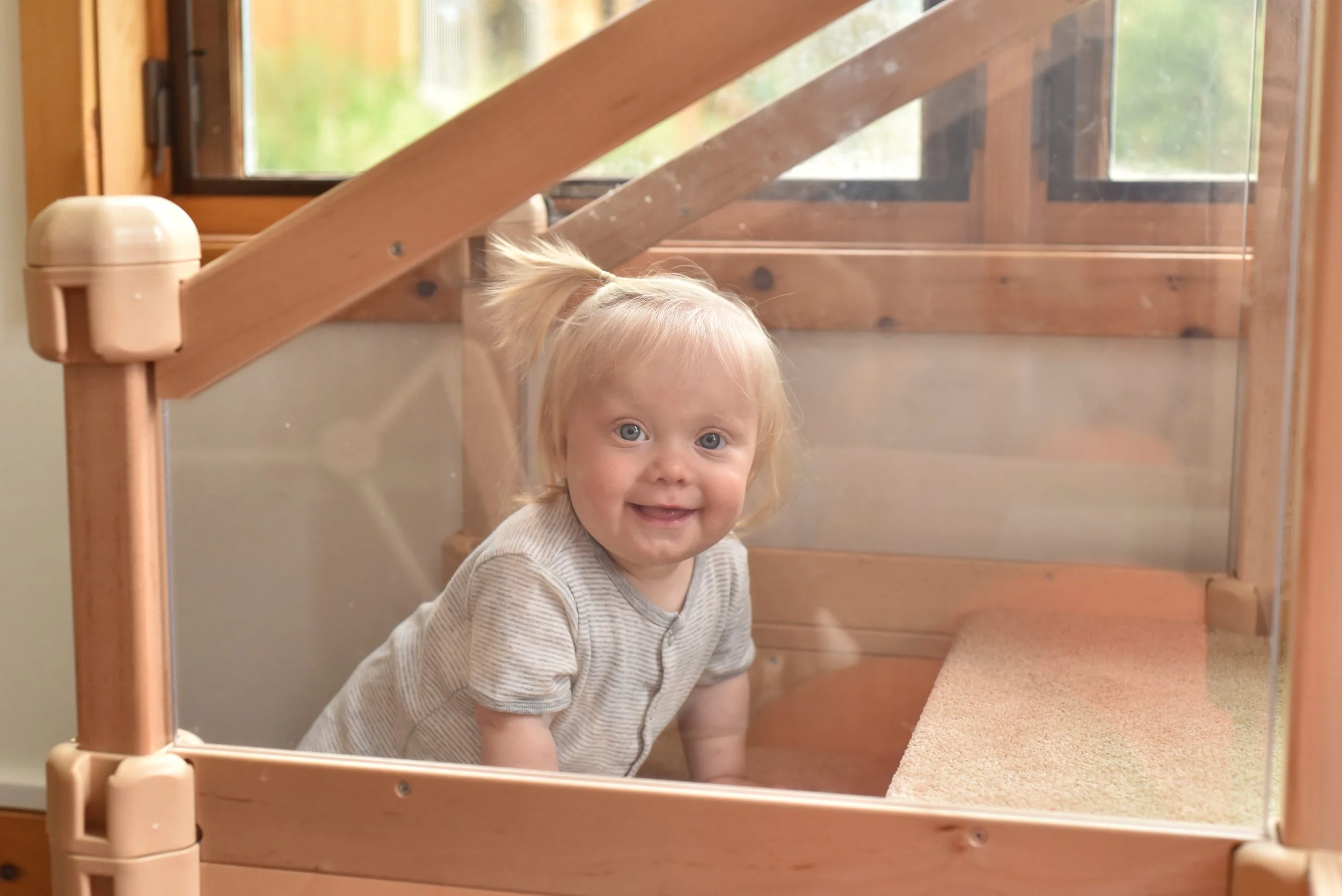
This “Trust in the World” allows for the development of the second psychological leg, “Trust in the Self.” Once a child learns that they can count on the world to meet their most basic needs, they learn that they can begin to explore their environment. It is through this exploration of their environment that they learn that they can trust themselves. When we allow a child to struggle and overcome, they begin to understand what they are truly capable of.
In the Nido, we witness struggles every day. Our youngest babies work again and again at trying to reach for something nearby. Sometimes they will accidentally happen upon grasping something. Once they realize they can do this, they will try to repeat the action. We get to observe as each little movement contains micro-adjustments until they are finally successful in reaching their quarry. Babies will do this again and again until they have mastered the skill of intentional grasping. Sometimes they become frustrated along the way; rather than helping them by placing the item in their hand, we try to sit nearby and observe the struggle to allow for independent accomplishment.
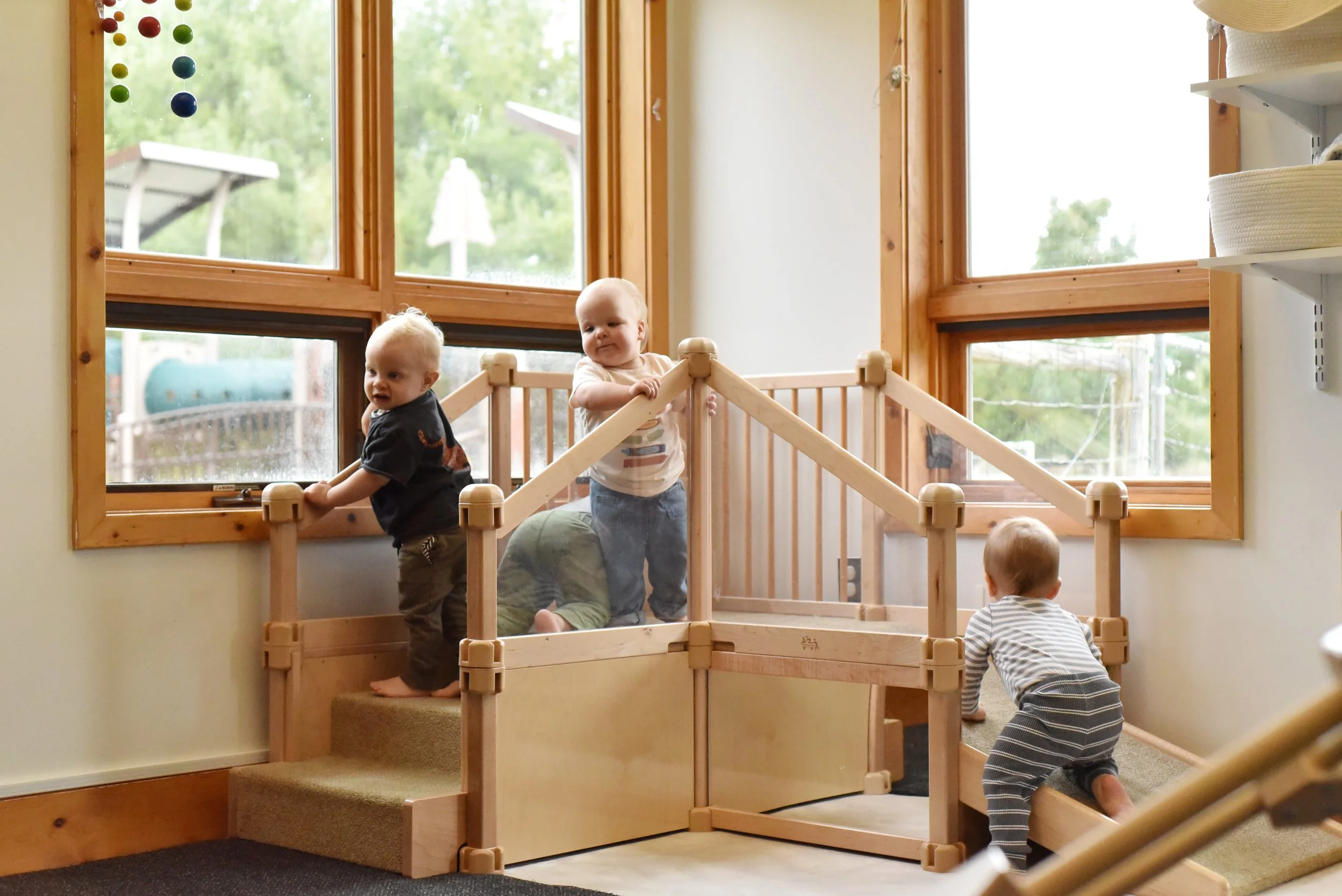
This struggle is also frequently observed in our older children on the climber. Many times a child will work for days or weeks to learn how to climb the stairs only to realize that they are stuck once they get to the top. So many times a Nido adult can be seen sitting next to the climber offering encouraging words of support during an attempted descent down the ramp or stairs. It is a Nido rite of passage to learn how to do quick laps on the climber after what is sometimes weeks of being stuck at the top.
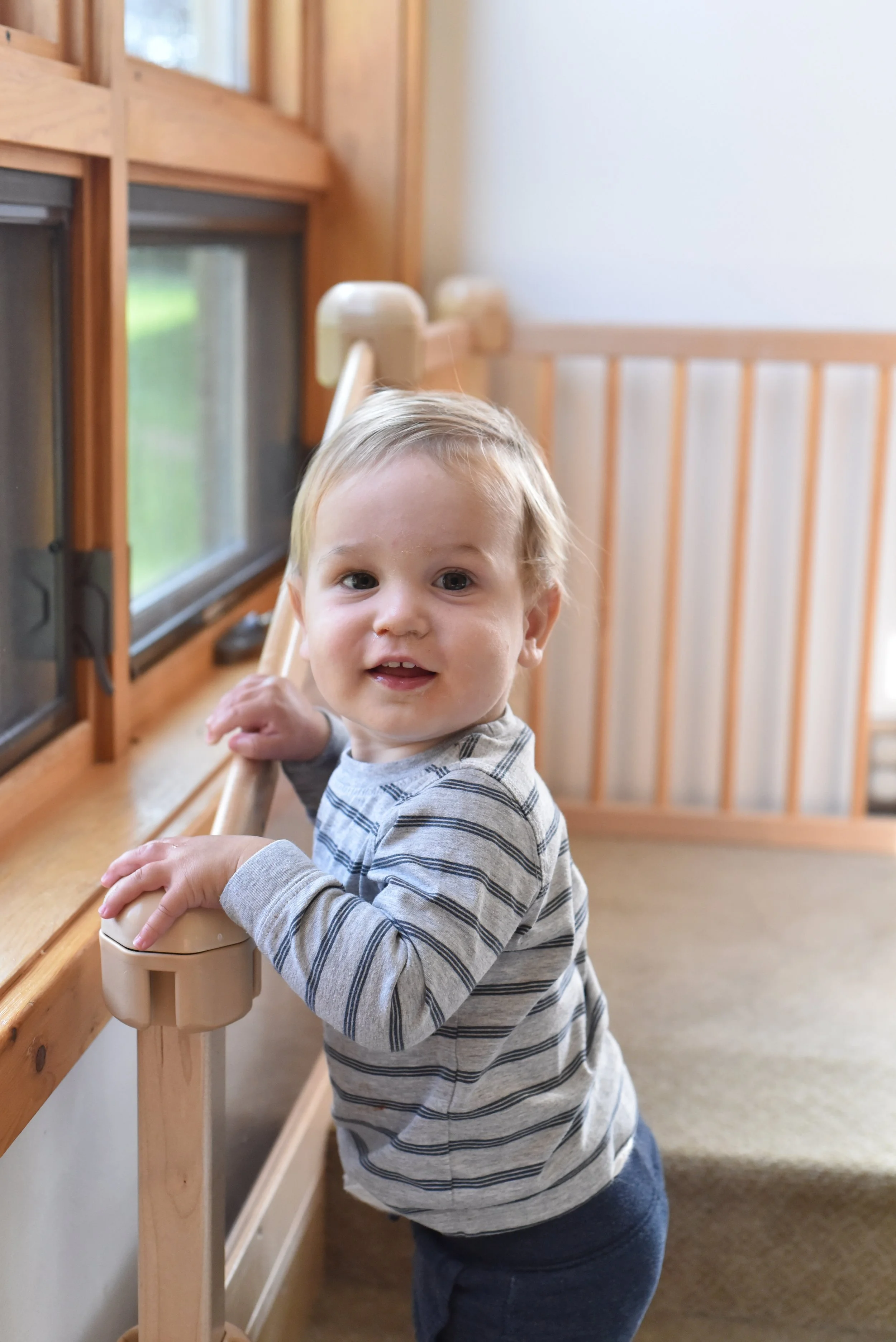
Individual needs are balanced within the group care setting. In our efforts to follow the child, we know that each baby is on their own individual schedule; we also know that we have to follow that schedule within the constraints of every other child’s schedule. Every baby doesn’t nap at the same time every day; rather, we utilize flexible time blocks to make sure that everyone’s physical care needs are met.
We do our best to mimic the routines that each child brings from home, but often school routines can be quite different due to the nature of group care. Some children need bottles or food more frequently at school than at home. Nap routines can also be quite different in a group care setting. It is difficult to exactly mimic a child’s schedule from home at school while also meeting the needs of the eight other children in our classroom. Even though care might look different from home, our team is always striving to meet everyone’s individual needs while caring for the group. It is always our greatest goal that the babies develop trust in their caregivers so as to develop trust in themselves as capable individuals.