Curricular Scope
Family Guide
Introduction
This Curricular Scope was created by The Children’s House and Compass Montessori Junior High faculty to help the reader understand our school curriculum. It is designed to demonstrate the continuum of knowledge from one developmental level to the next and to illustrate the depth of each subject area.
Our mission is to raise confident, lifelong learners who contribute to their communities and the greater world, not only through their learning of academic subjects, but also in their development of independence, confidence, collaboration, and compassion.
Dr. Montessori referred to this approach as “Educating the Whole Child,” that is, catering to each student’s academic, physical, emotional, spiritual, and moral development. Montessori’s developmental approach recognizes that each child reaches certain milestones at different stages.
We hope that the reader will gain an understanding of the interconnectedness that our high-fidelity Montessori education provides.
Dr. Montessori’s
Four Planes of Development
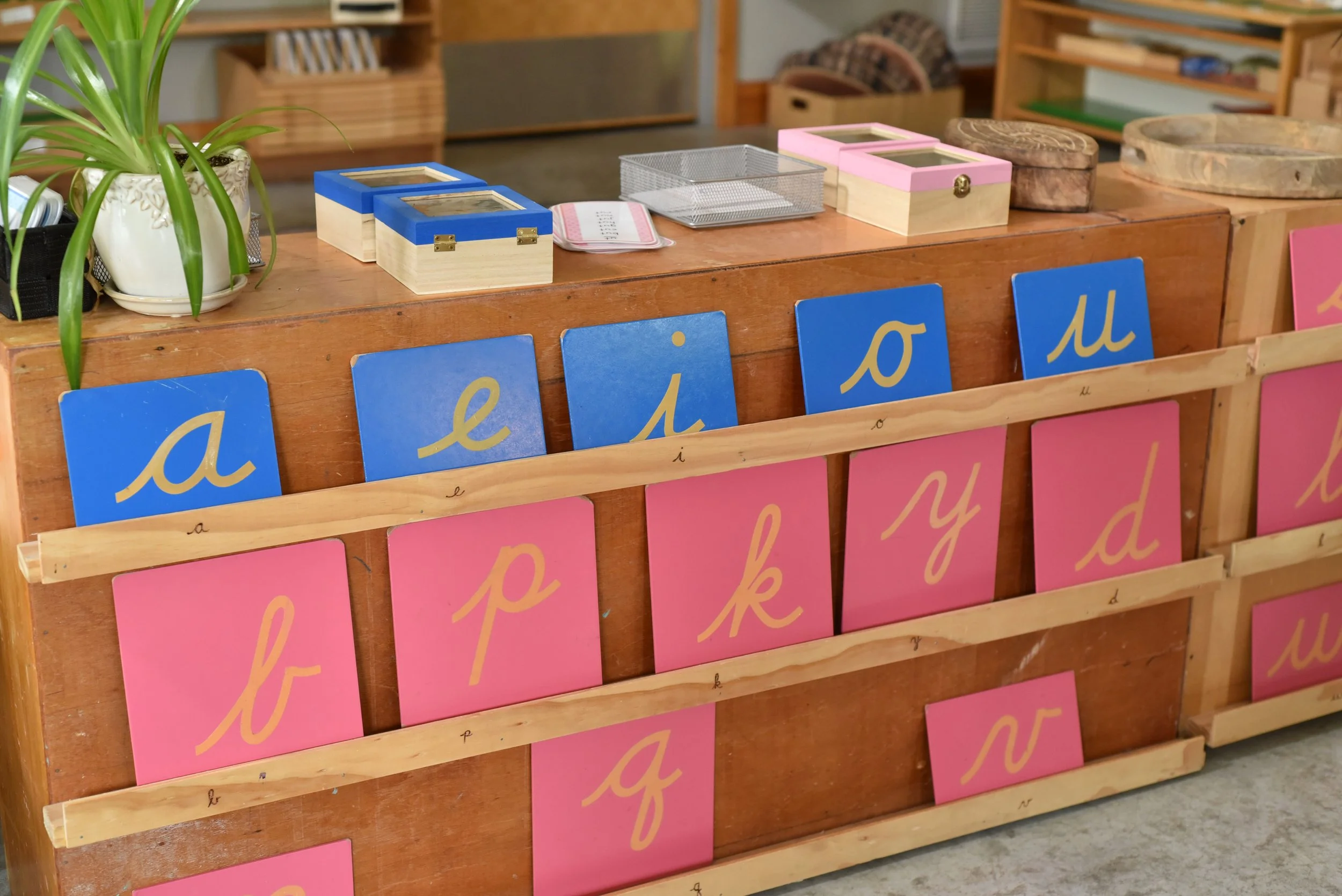
Language
“Language is one of the most striking things he absorbs – one of the characteristics of man – but later he absorbs everything. He becomes a living representative of living humanity.”
~ Maria Montessori: The 1946 London Lectures, p. 79
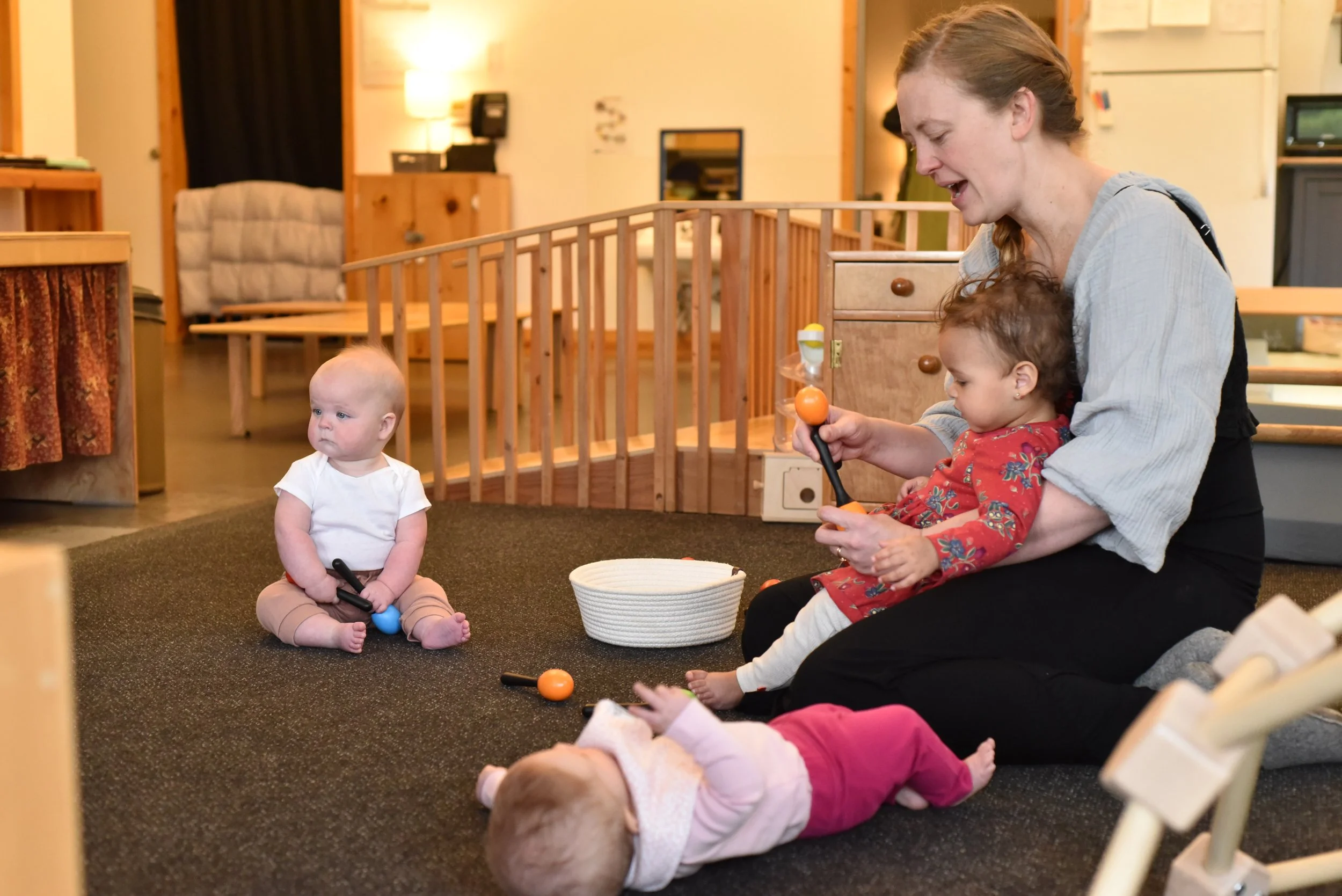
Nido: Language
Nido language is broken up into the prelinguistic and linguistic stages. Within both stages, receptive and expressive language are promoted to encourage community connection.
-
Watching faces and lips
Cooing, laughing and squealing
Babbling, shaking head no
Waving
Baby sign language
Embedded words
Telegraphic speech
Receptive language includes distinguishing one’s emotions based on the tone of voice, responding to voices, and following one-step directions
Identifying and expressing feelings and needs
Guided questions
Interacting with adults and peers within community
Reading books and singing songs
Puzzles
Nomenclature cards and objects
Naming and classifying classroom materials
Food exploration
Dialogic reading of books in the classroom
Rhyming in songs and poems
Development of Eye-Hand Coordination
Early tactile experiences are meant to develop hand strength as necessary for writing
Activities are presented from left to right
Development of pincer grasp through self-feeding and classroom exploration
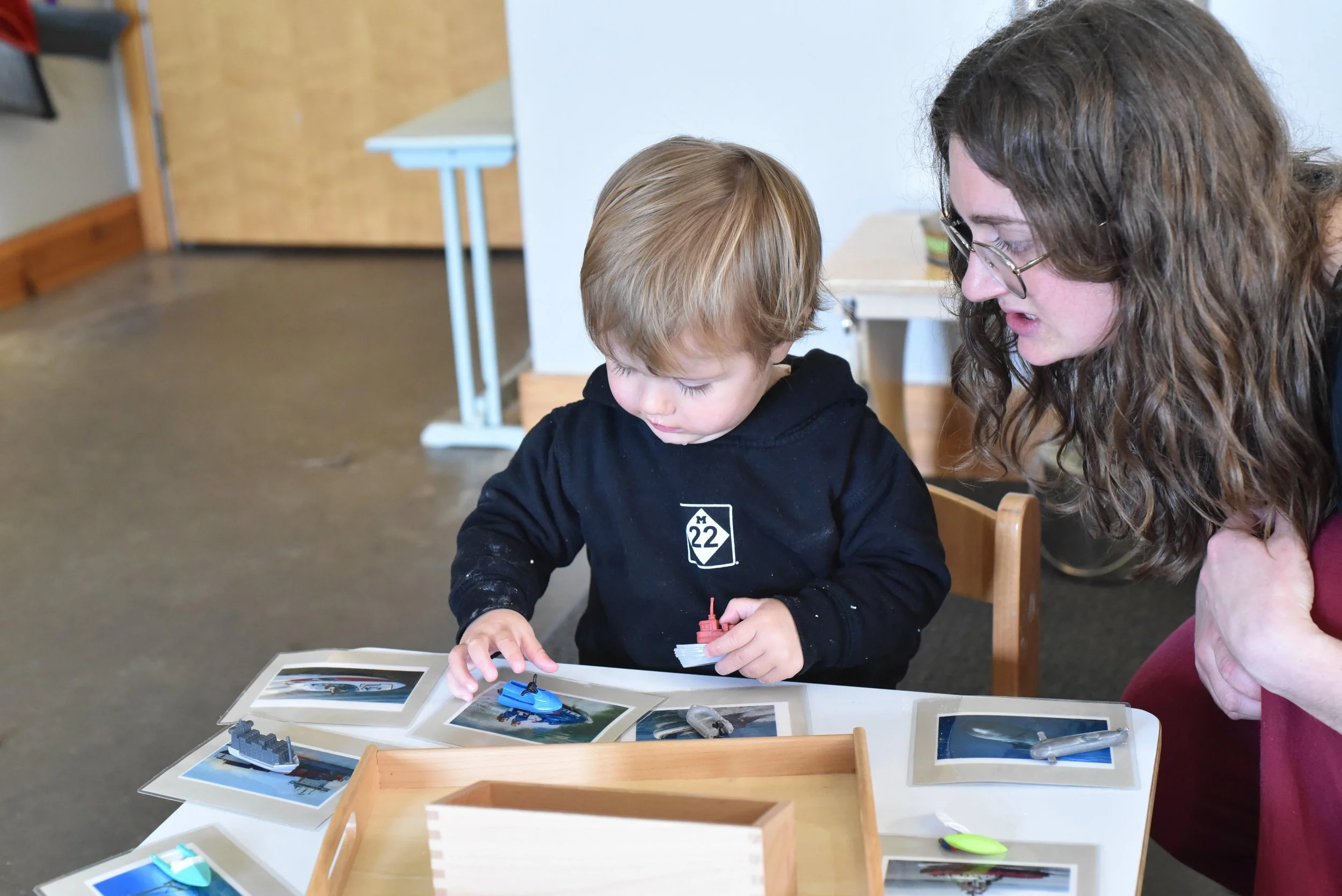
YCC: Language
YCC language develops both receptive and expressive language through vocabulary, conversation, and connection.
-
Receptive language
Expressive language
Vocabulary
Simple conversation
Community connection
Identifying and expressing feelings and needs
Guided questions
Interacting with adults and peers within community
Reading books and singing songs
Puzzles
Nomenclature cards and objects
Naming and classifying classroom materials
Food exploration
Rhyming
Dialogic reading of books in the classroom
Refinement of Eye-Hand Coordination
All classroom work has the purpose of strengthening the hand to aid in the development of writing in Primary
Activities are presented from left to right
Refinement of pincer grasp through self-expression materials, manipulatives, and practical life experiences
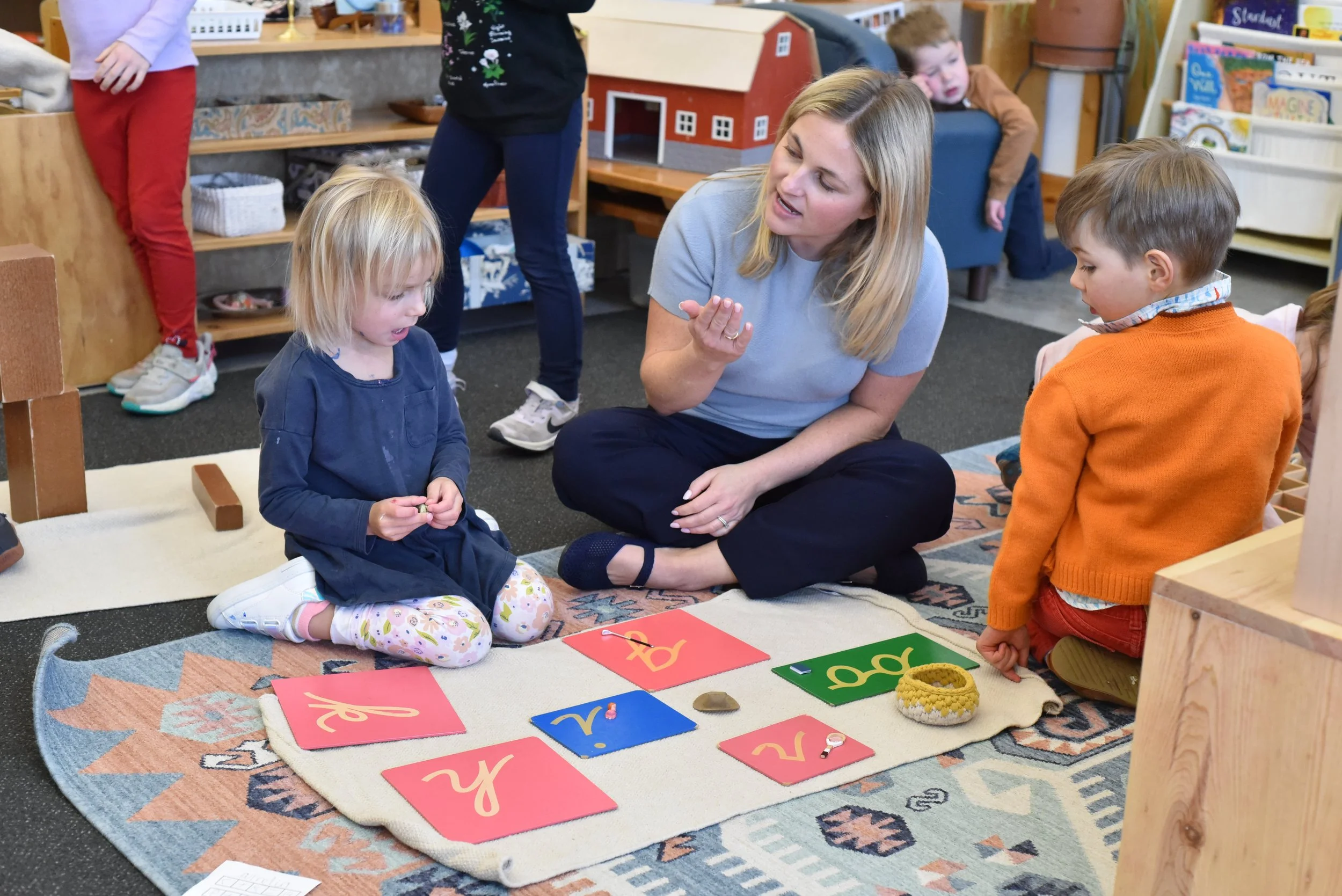
Primary: Language
Language is the thread that weaves together all areas of our classroom and allows us to make meaningful contributions to the greater conversations of the world. At the primary level, receptive and expressive language skills continue to grow. Through direct and intentional instruction, children strengthen their phonemic and phonological awareness skills, their ability to encode and decode, and their ability to use correct penmanship, and they are introduced to grammatical concepts.
-
Developing vocabulary through lessons
Appreciating literature
Telling stories
Asking and answering questions
Listening
Rhyming
Recalling lowercase, cursive letter sounds using Sandpaper Letters
Identifying individual sounds in words using The Sound Game
Sound manipulation and classification
Decoding
Phonograms
Transition in reading to and from cursive and print
Sight word knowledge:
Sharing thoughts, ideas, and stories using the Movable Alphabet
Analyzing spoken language
Writing words with corresponding graphic symbols
Introduction to research skills
Mastery of the hand in using and controlling a writing instrument, both in keeping within limits and lightness of touch while using the metal insets, sandpaper letters, sand tray, chalkboards and then paper with pencil
Moving from left to right
Traditional pencil grip
Direct instruction of the proper formation of cursive letters and numbers
Sentence structure and word order
Introduced to the article, adjective, noun, conjunction, preposition, verb, adverb
Introduced to plurals, similes, antonyms, contractions, compound words, homophones, homographs, idioms

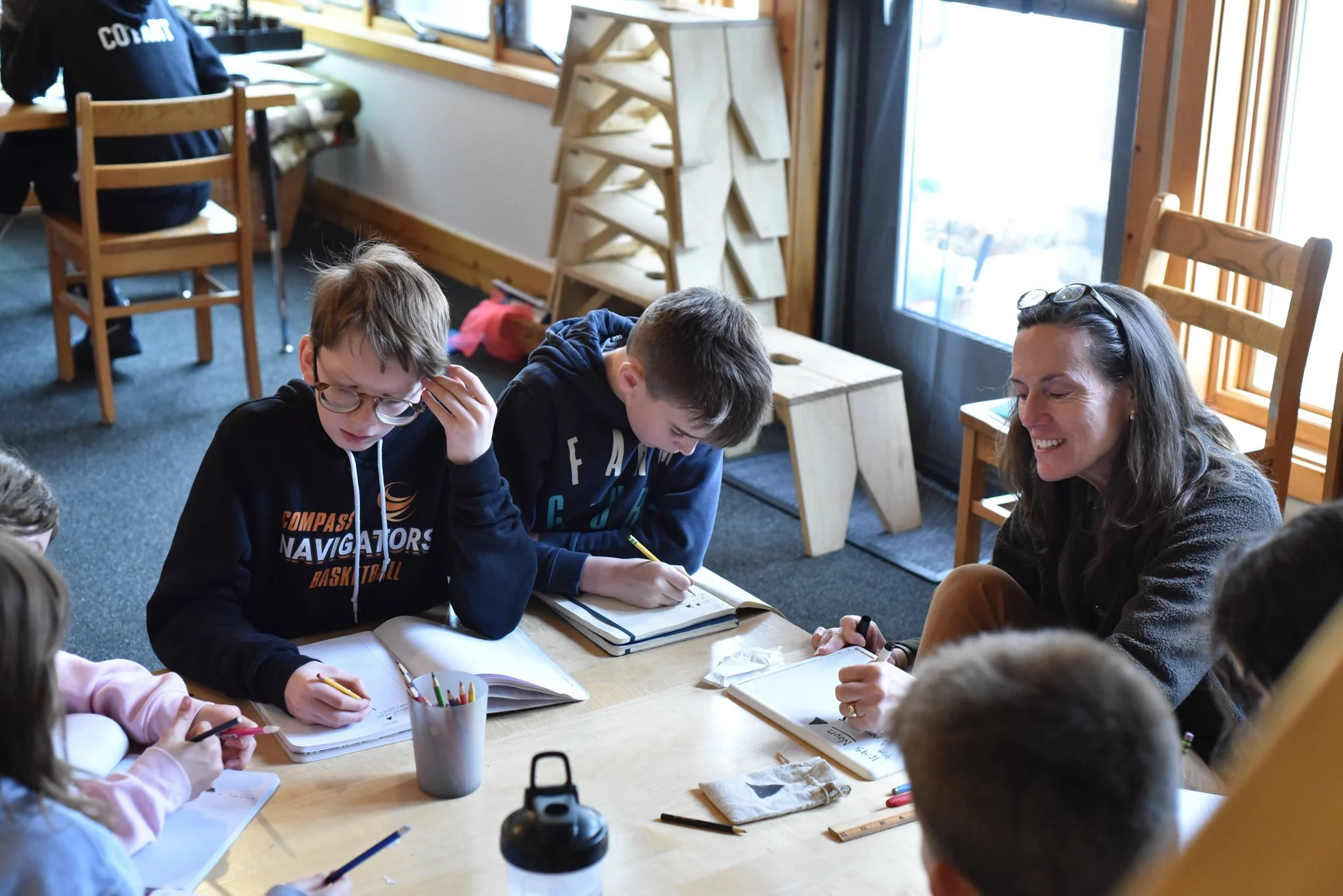
Lower Elementary: Language
Lower Elementary language builds on language learned in Primary to support children’s effective use of spoken and written language.
-
Great Lesson: The Story of Communication in Signs: History of Language
Spoken Language: Engaging in drama activities, sharing and presenting work, oral storytelling, interpretive reading cards, and memorizing poetry. Discussing topics collaboratively in large and small groups by expressing one’s own ideas and listening to others
Reading & Literature: Reading for information and fun, for example: Interpretive Reading Cards, Reading comprehension strategies to answer key questions and illustrations to display understanding, Reading diverse and varied genres to identify character traits, figurative language, elements of a story, sequence of events, and compare and contrast elements of a story and its characters, Reading, studying, and memorizing poetry
Written Language: Building research and writing skills through note-taking, summarizing, outlining, paragraph structure, writing, editing, and publishing. Experimenting with figurative language, elements of a story, and dialogue. Identifying and exploring vocabulary of compound words, prefixes, suffixes, antonyms, synonyms, alphabetical order, homonym/ homograph/homophone, etc. Spelling rules, vocabulary investigation, and analogies. Identification and usage of the parts of speech. Past, present, and future tenses. Creating simple and compound sentences
Upper Elementary: Language
Upper Elementary language builds on lessons continued from Lower Elementary to support children’s effective use of spoken and written language.
-
Great Lesson: The Story of Communication in Signs: History of Language
Spoken Language: Engaging in small and large group discussions to develop active listening and collaboration, following agreed upon protocol and summarizing points discussed, including claims supported by evidence. Presenting individual and group studies, creative writing, and poetry. Developing projection, enunciation, eye contact, and use of emphasis for effective speaking
Reading & Literature: Reading different genres and identifying elements of storytelling. Describing a story’s plot, character’s response, and resolution of conflict. Developing reading comprehension strategies to support answers to questions about text. Building vocabulary, strengthening word recognition, and developing critical thinking skills. Considering varied writing styles and development of individual voice
Written Language: Building research and writing skills through note taking, outlining, paragraph structuring, writing, and editing. Exploring narrative, expository, and persuasive prose and poetry. Writing arguments supported by clear evidence and logical reading, linking thoughts in an effective manner and providing a concluding statement. Applying proper use of grammar, punctuation, capitalization, and spelling. Using technology with support, including internet, to produce and publish writing and collaborate with others. Identifying affixes, compound words, word families, synonyms, antonyms, homophones, and homographs. Learning parts of speech. Applying correct verb tense, conjugation, agreement, and voice. Analyzing simple, compound, and complex sentences while identifying different structures and variations of sentences. Identifying subject, predicate, direct/indirect objects, adverbial modifiers, attributives, appositives, and prepositional phrases
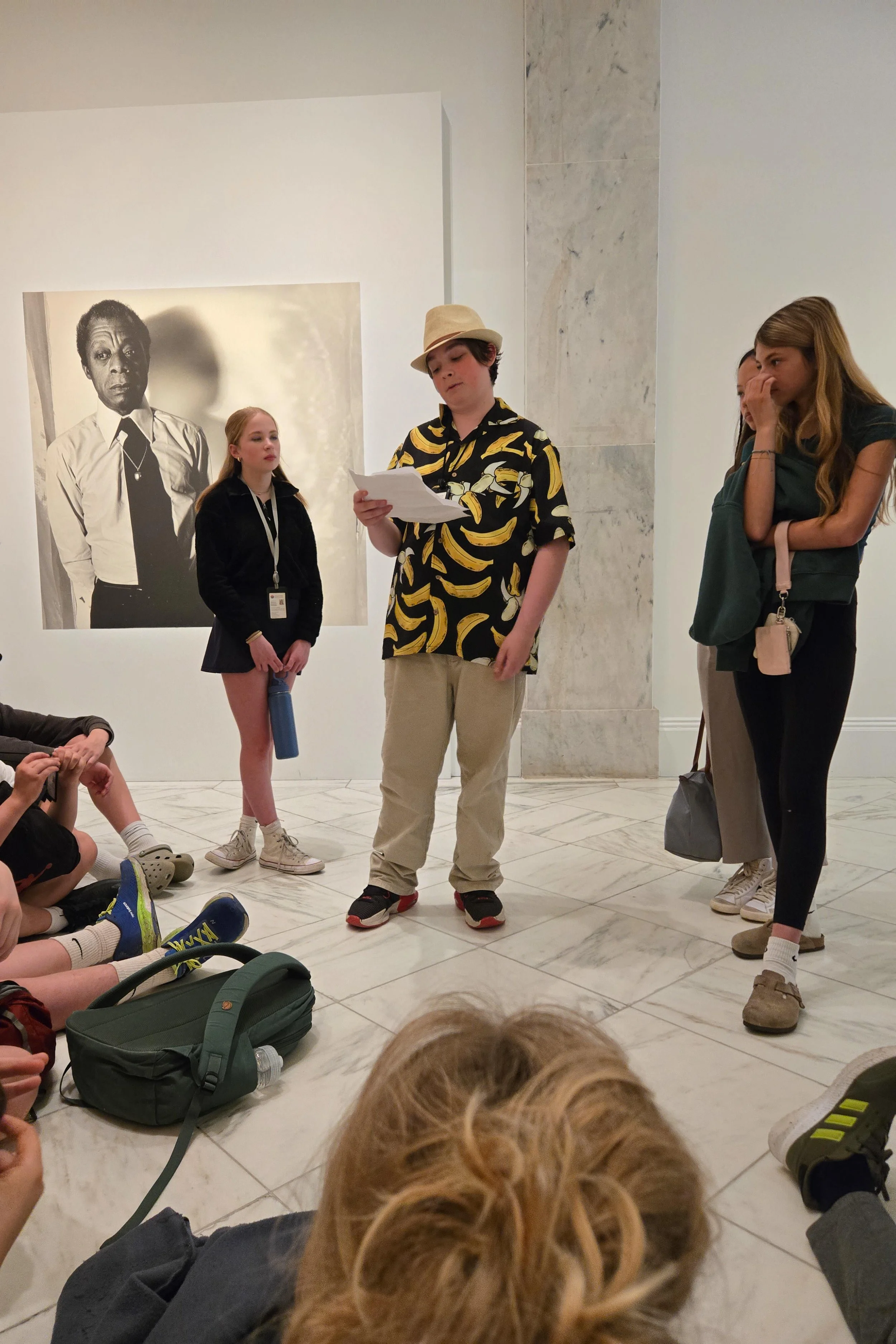
Junior High: Language
Junior High language builds on lessons continued from Upper Elementary to support learners' effective use of listening, speaking, reading, and writing.
-
Spoken Language Skills: Participating in a range of conversations and collaborations with diverse partners and building on others’ ideas. Expressing ideas clearly and persuasively. Presenting diverse media formats visually, quantitatively, and orally. Adapting speech to varied contexts and communicative tasks. Demonstrating command of formal English when appropriate. Making strategic use of digital media and visual displays to express information and audience understanding.
Comprehension: Evaluating a speaker’s point of view, reasoning, and use of evidence and rhetoric to support perspective. Developing critical questions to stoke peer discussion. Organizing ideas and information through the practice of note-taking. Identifying pertinent ideas to build robust research from a variety of sources. Gathering information from print and digital sources to assess credibility and accuracy.
Reading & Literature: Determining text theme and citing evidence while drawing inferences. Analyzing how dialogue and plot propel action and reveal characters. Analyzing how a text makes connections and distinctions among individuals, ideas, and events. Interpreting figurative, connotative, and technical meaning through context clues. Analyzing word choice and tone to decide the author's intent. Identifying analogies and allusions to other texts. Determining the intended audience and author bias. Assessing the strength of claims based on evidence. Analyzing conflicting texts side by side.
Written Language: Writing arguments to support claims using reasoning and evidence. Writing explanatory texts to examine and convey complex ideas clearly through organization and analysis of content. Writing narratives to develop real or imagined experiences using details and well-structured event sequences. Writing and producing research papers and projects based on focused questions that demonstrate an understanding of the subject under investigation. Synthesizing ideas, justifying conclusions, and translating sources into own words to avoid plagiarism. Organizing ideas by introducing a topic, giving supporting ideas, and providing a conclusion. Using transitions to create cohesion. Choosing appropriate language and vocabulary. Citing textual evidence to support analysis. Producing clear writing in which the development, organization, and style reflect task, purpose, and audience. Executing, often with the use of technology, planning, collaborating, revising, and editing as all part of the writing process. Self and Peer editing for subject-verb agreement, punctuation, capitalization, and consistent verb tense.

Math
“This system in which a child is constantly moving objects with his hands and actively exercising his senses, also takes into account a child's special aptitude for mathematics. When they leave the material, the children very easily reach the point where they wish to write out the operation. They can thus carry out an abstract mental operation and acquire a kind of natural and spontaneous inclination for mental calculations.”
Maria Montessori, The Discovery of the Child, p. 279
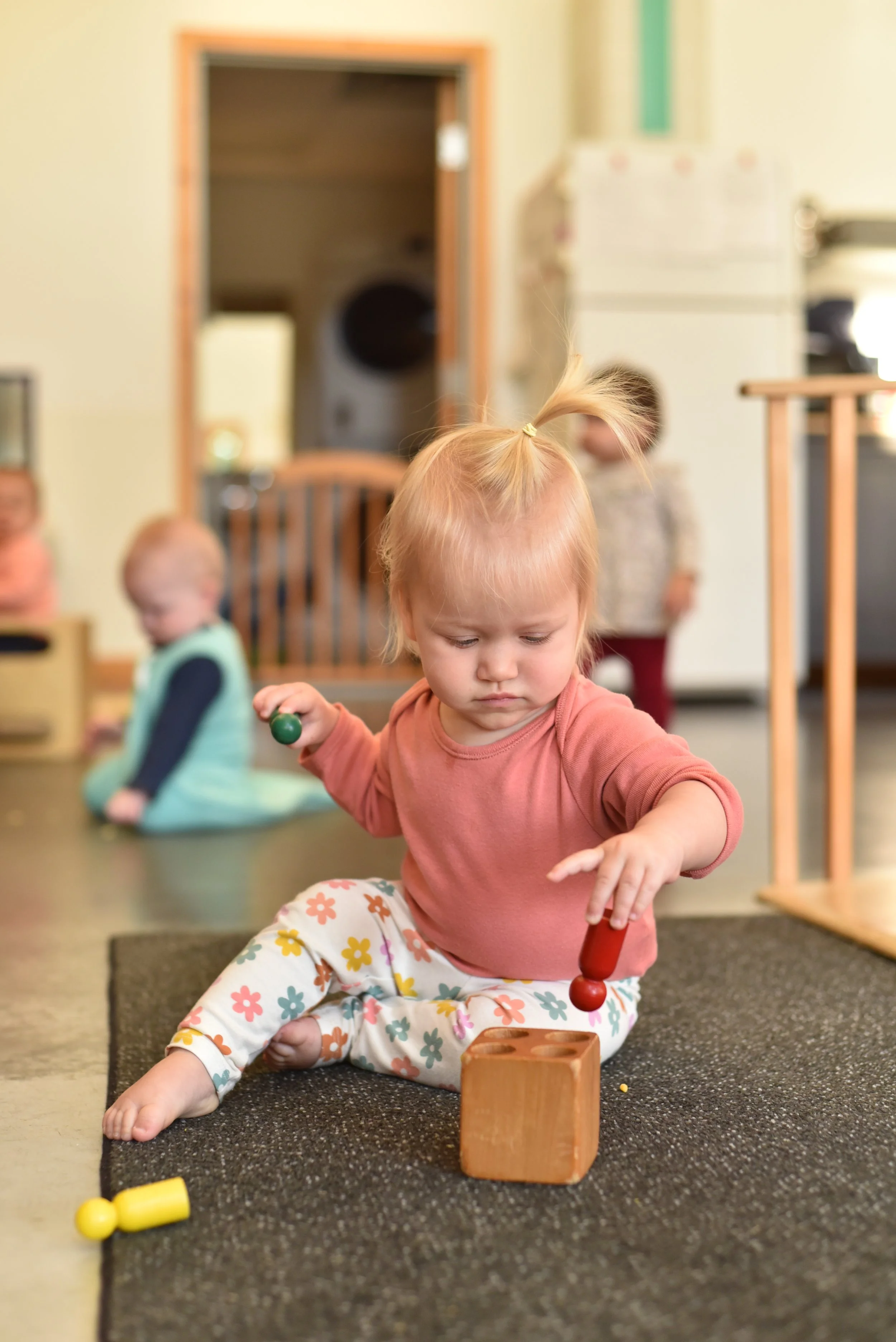
Nido: Math
Math is integrated so children can utilize sensorial activities within the classroom for math preparation.
-
Learning where their body is in space
Calculating the distance to items while reaching, stepping, and/or crawling
Sequencing due to order of material presentation
Learning simple math and sequencing through presentations
Movement games
Stacking and nesting
Imbucare and infilare materials
Puzzles
Language environment includes mathematical terms
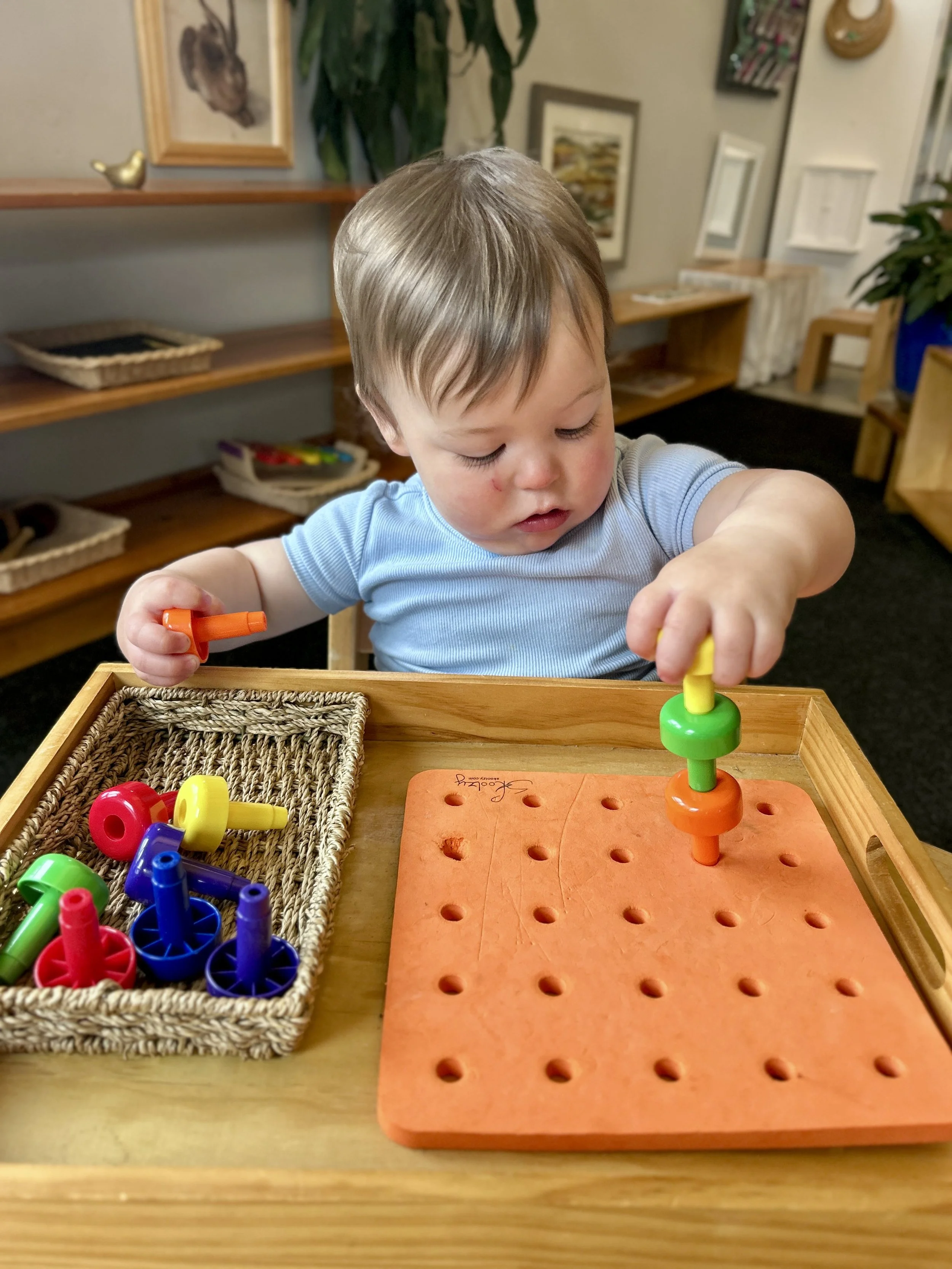
YCC: Math
Math is integrated so children utilize sensorial activities within the classroom and direct instruction for math preparation.
-
Developing skills through real and concrete exploration like one-to-one counting, correspondence and rote counting 1-10
Sequencing which encourages memorization
Baking and other food preparation
Matching objects to cards
Stacking and nesting
Sorting/classifying
Puzzles
Hands-on manipulatives
Multi-step presentations
Primary: Math
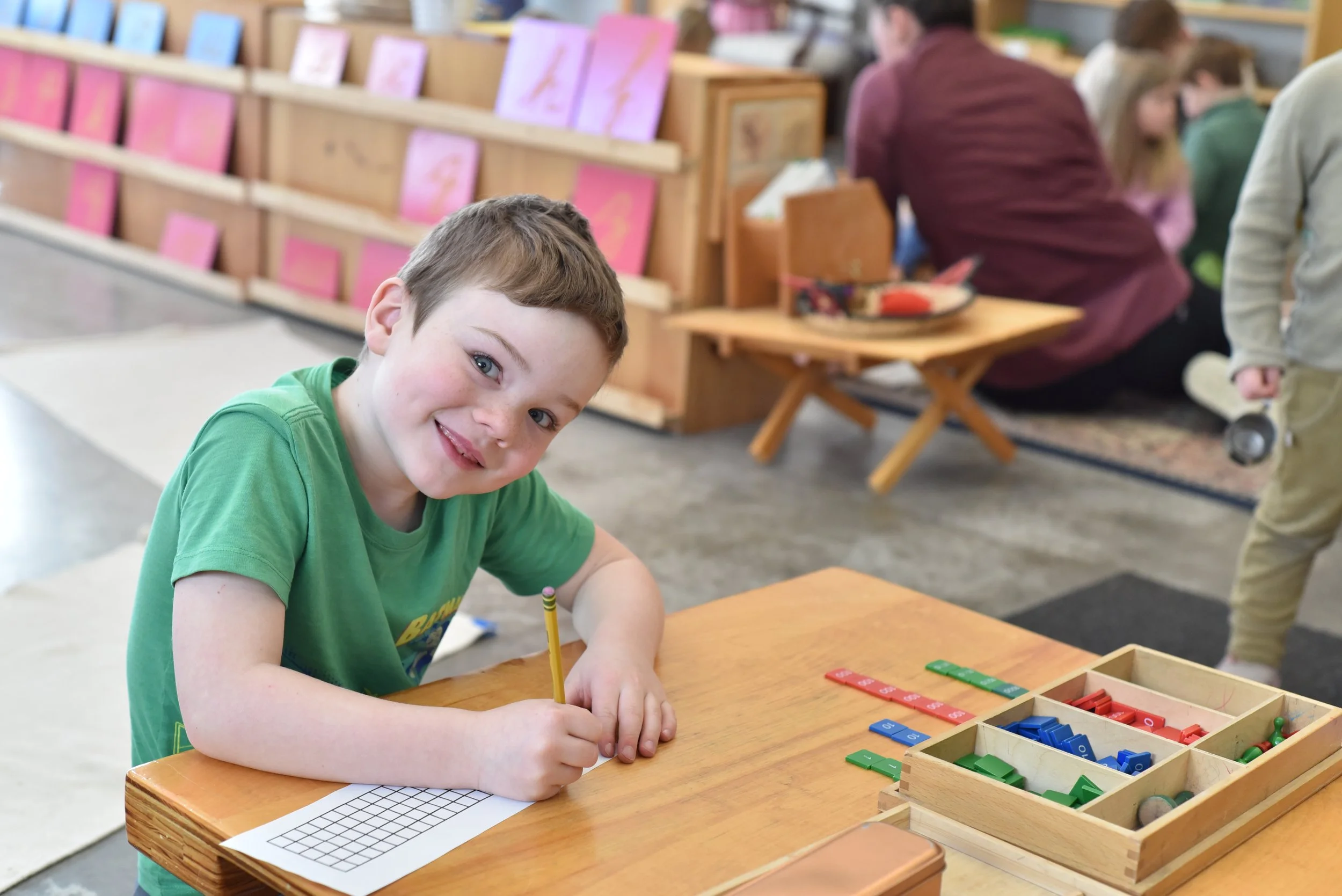
The progression of the math curriculum at the Primary level is highly sequential. Children are guided through a series of lessons to help them discover the mathematical patterns of the world. As children progress through the curriculum, it is with the goal of progressing towards abstraction and internalization of mathematical operations and concepts.
-
Learning numbers one through ten through sequencing, associating concrete quantity with numeric symbols, and names of numbers
Introducing zero and the concept of odd and even
Counting and learning names for teen numbers and tens, linear counting, skip counting, and preparation for multiplication and squaring
Learning the decimal system and their categorical sizes and working with large quantities
Concept of making exchanges so that we have no more than a quantity of 9 in any category (units/tens/hundreds/thousands)
Exploration of addition, subtraction, multiplication, and division operations
Finger charts for addition, subtraction, multiplication, and division
Exposing children to memorization of combinations of ten, addition, subtraction, multiplication, and division through repetition
Applying operations in more abstract ways
Learning the terminology and written form associated with fractions
Lower Elementary: Math
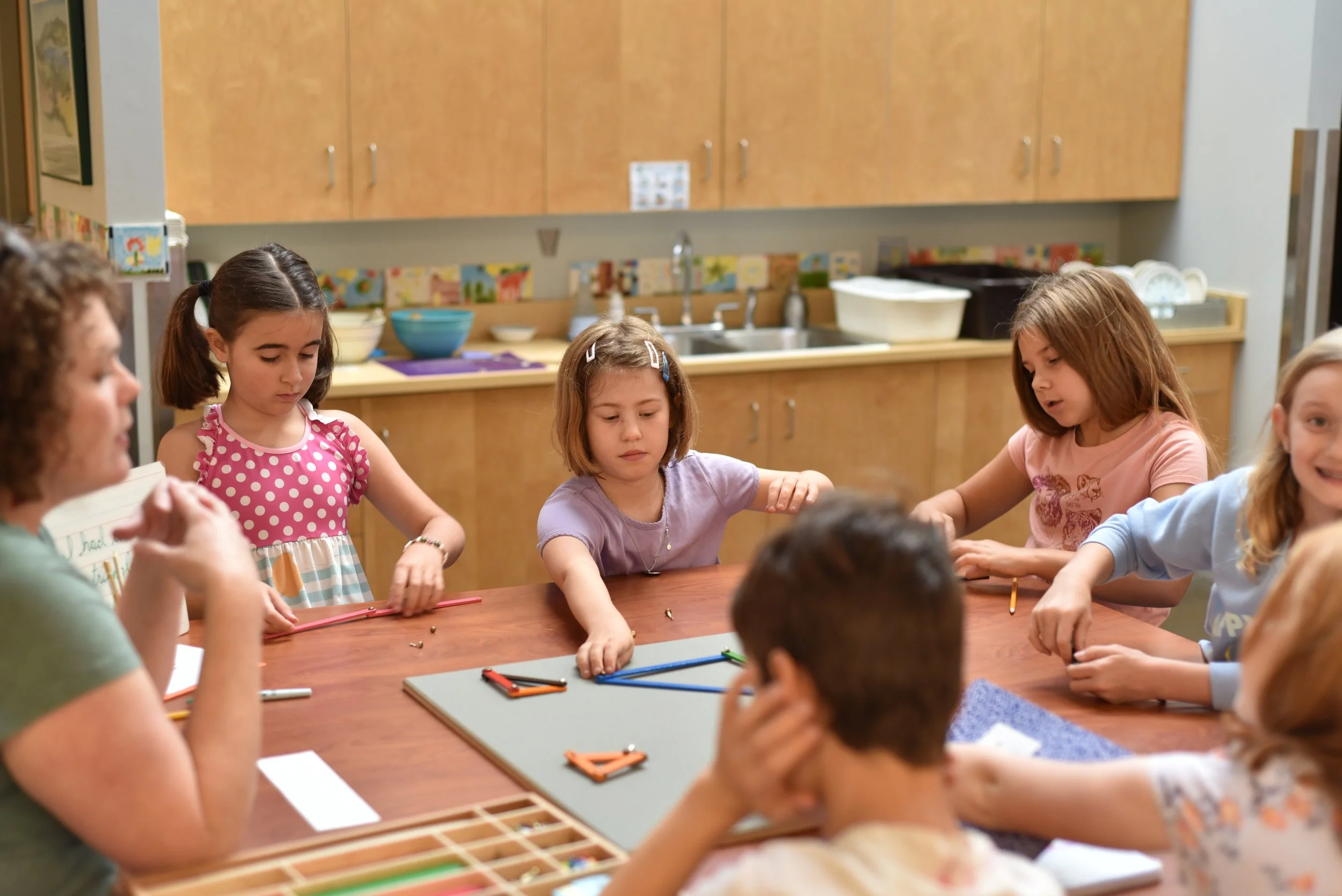
Math is directly instructed to support children’s movement from concrete materials to abstract computation and application.
-
Great Lesson: History of Numbers
Operations addition, subtraction, multiplication, and division
Math fact memorization
Conceptual understanding of fractions, decimals, factors, squares and cubes, and simple operations around these concepts
Place value
Multiples through skip counting, finding common multiples, and identifying the least common multiple
Getting acquainted with money by identifying monetary units, adding and subtracting, making change, and word problems
Measurement concepts like linear measurement, cooking, weight, and volume
Understanding time by reading a clock, writing time, and subtracting minutes
Practical and historical context to geometry
Sensorial exploration of congruent, similar, equivalent shapes
Study of lines, including their parts and relationships
Study of angles: measurement, parts, and types
Study of polygons
Identification of triangles, names, parts, and angles
Introduction to perimeter and area of rectangular and square objects
Introduction to the circle
Sensorial introduction to volume

Upper Elementary: Math
Math is directly instructed to support children’s movement from concrete materials to abstract computation and application.
-
Great Lesson: History of Numbers
Congruence, similarity, and equivalence of shapes
Parts, types, perimeter, and area of polygons with an introduction to the Pythagorean theorem
Identifying parts, types, and measurement of angles demonstrating the relationship among pairs, transversals, and polygons
Parts, types, and relationships between lines
Parts, circumference, and area of a circle, including pi
Solid geometry and the types, volume, and surface area
Coordinating planes using graph points on the coordinate plane to solve real-world and mathematical problems
Properties in math operations associative, commutative, and distributive,
multiples and factors
Moving from concrete materials to abstract understanding and practice in: multiplication, division, squaring and cubing of numbers, fractions and decimals
Concrete practice with: signed numbers, other number bases, ratio and proportion, probability, statistics, measurement
Word problems
Introduction to algebra

Junior High: Math
Compass Junior High utilizes the College Preparatory Math curriculum for pre-algebra and algebra. Students will build deep mathematical understanding, language, and reasoning through group investigations and discussions while learning how to make sense of problems and persevere in solving them.
-
Recognizing math as a language to describe patterns and predict outcomes, and a tool to plan efficiently and solve problems
Analyzing ratios and proportional relationships
Applying the number system by extending understandings of operations with fractions to add, subtract, multiply, and divide rational numbers
Using properties of operations to solve algebraic expressions and equations
Understanding functions, expressions, and sequences by investigating growth of patterns and the graphs of various functions
Learning cube root, absolute value functions, domain and range, describing a graph, arithmetic, geometric, and recursive sequences
Learning exponential and linear functions and expressions
Understanding quadratics by using multiple methods, both concrete and abstract, and using quadratic formulas
Solving linear inequalities
Solving real-life mathematical problems involving angle measure, area, surface area, volume of cylinders, cones, and spheres
Drawing, constructing, and describing geometrical figures and describing relationships between them
Using sampling to draw inferences about a population
Drawing informal comparative inferences about two populations
Investigating chance processes and evaluating probability models
Investigating patterns of association
Humanities
“...to give the whole of modern culture has become an impossibility and so a need arises for a special method, whereby all factors of culture may be introduced to the six-year-old; not in a syllabus to be imposed on him, or with exactitude of detail, but in the broadcasting of the maximum number of seeds of interest. These will be held lightly in the mind, but will be capable of later germination, as the will becomes more directive, and thus he becomes an individual suited to these expansive times.”
Maria Montessori, To Educate the Human Potential, p. 3
Nido: Humanities
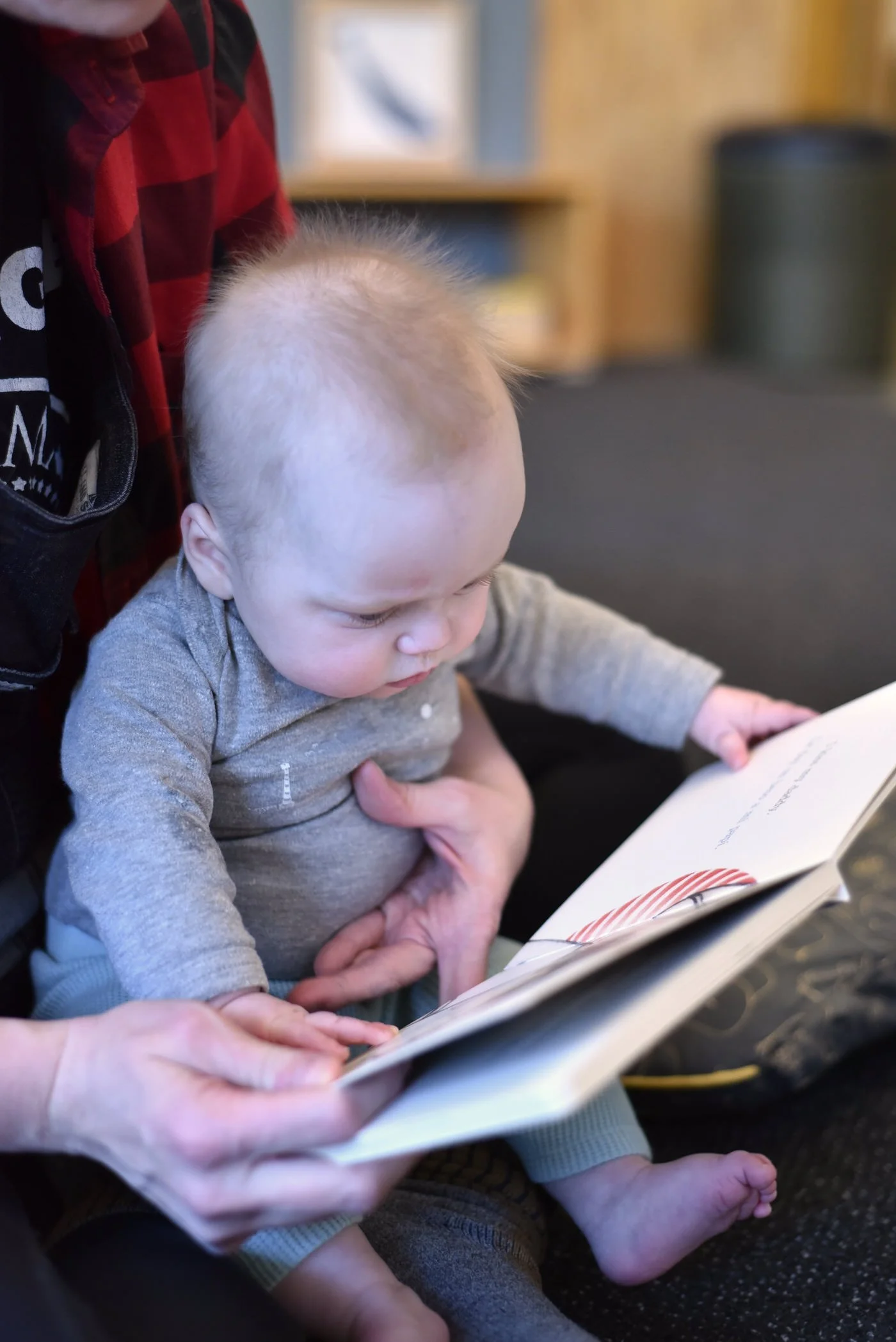
Humanities is taught indirectly and directly. Children are exposed to diversity, equity, including, and belonging through classroom materials, physical science, fine arts, and conversation.
-
Activities include books, songs, instruments, nomenclature cards, nomenclature objects, and wall art
Nomenclature cards about celebrations throughout the world
Conversations with children about celebrations and holidays
YCC: Humanities
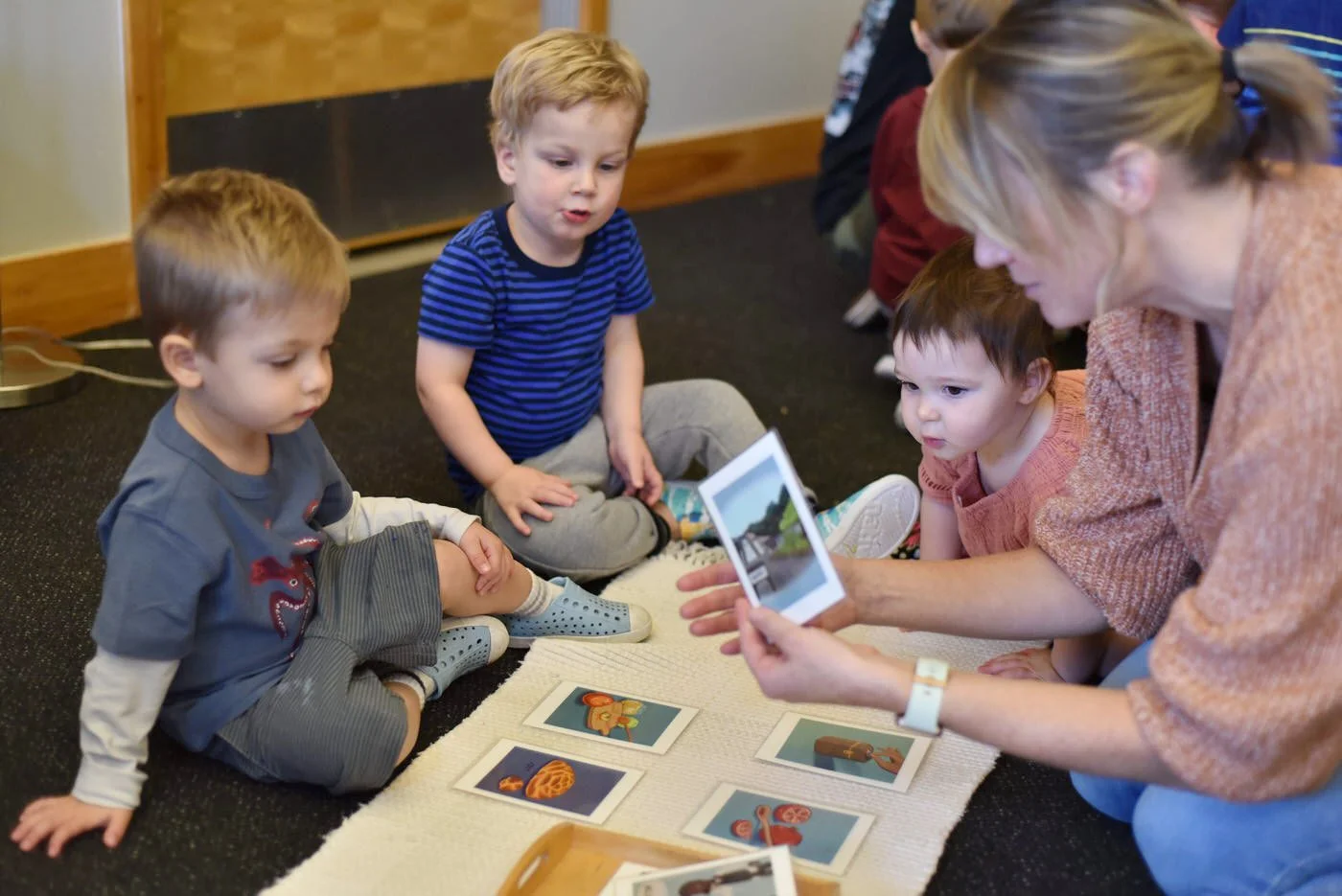
Humanities is taught indirectly and directly. Children are exposed to diversity, equity, including, and belonging through classroom materials, physical science, fine arts, and conversation.
-
Activities include baking and cooking, books, songs, instruments, language cards and objects, puzzles, and wall art
Nomenclature cards about places throughout the world
Seven Wonders of the World matching cards and objects
Primary: Humanities
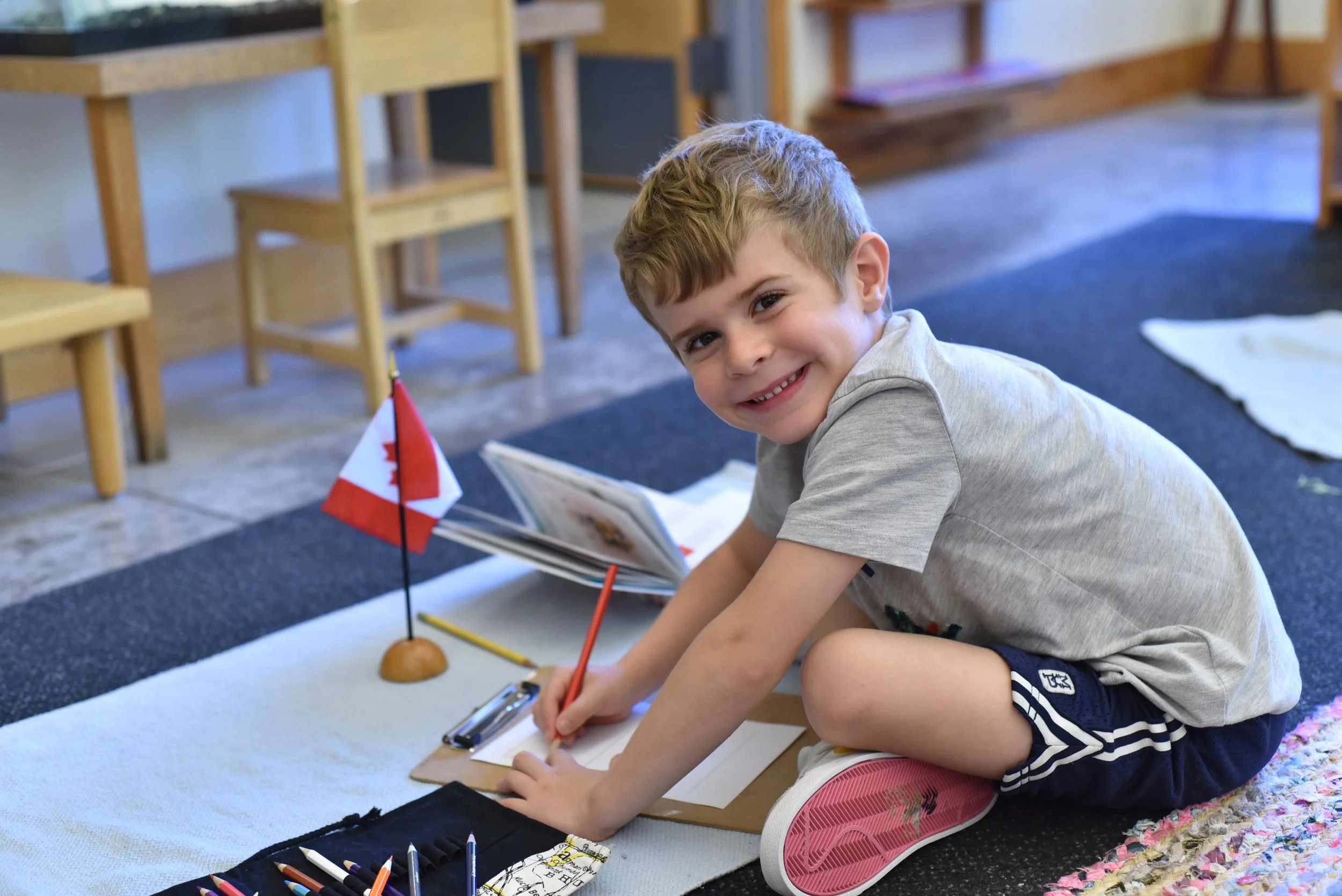
Humanities are taught directly and indirectly through lessons and guiding a child’s sense of the world beyond themselves so they feel and understand interconnectedness and compassion for culture.
-
Activities include true stories, poetry, architecture like the Roman Arch, and puzzle maps to learn about explorers and creation of maps for travel
Studying and conversations of diverse artists, composers, authors, activities, educators, and more
Exposure to various languages, customs, traditions, and cultures from around the world
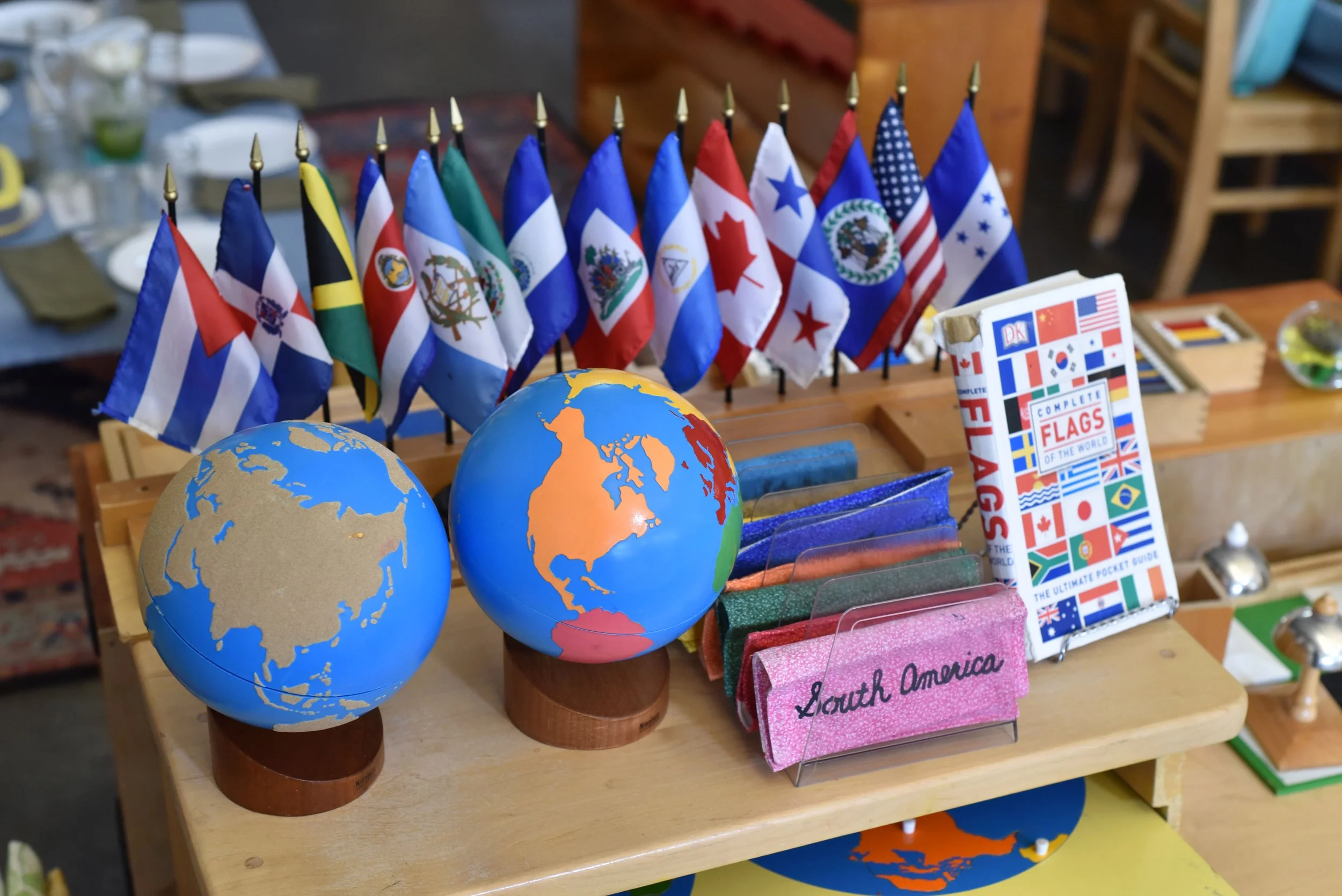
Learning nomenclature of continents, countries, states, and oceans
Recognizing flags from around the world
Creating order and impressions of information relating to the world, locations, cultures, etc.
Introducing children to their place in the cosmos
Gathering awareness of oneness of mankind through learning about the variation among people as a result of physical geography and inventions of mankind
Activities include sandpaper and painted globes, land and water forms, puzzle maps, and geography folders
Lower Elementary: Humanities
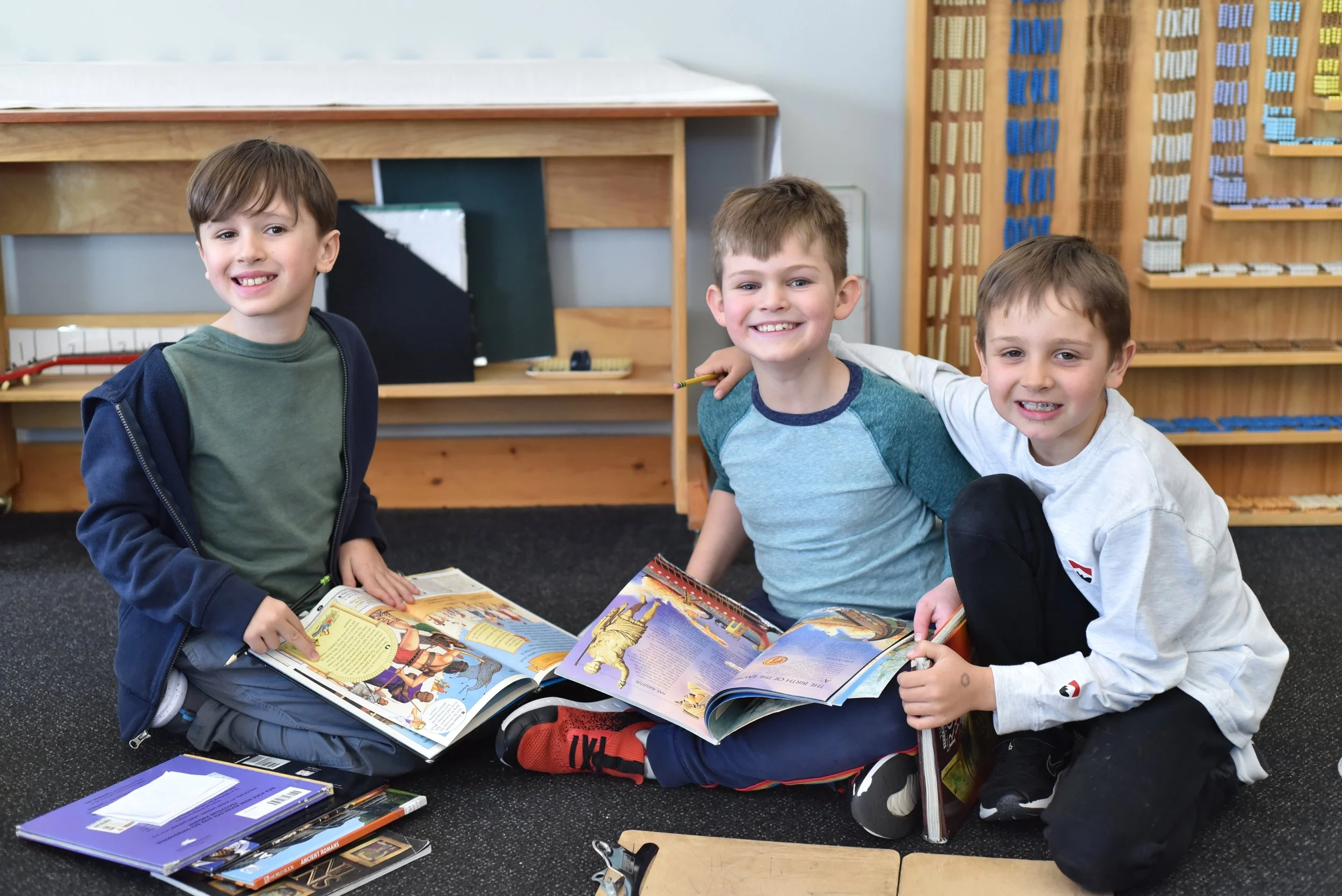
Lessons and practice continue to build children’s understanding of the world around them and those who came before them so they can give gratitude for the past and their present.
-
Great Lesson: Coming of Humans
Studying human geography through the classroom environment via daily social/emotional lessons, conflict resolution, and interpersonal work with children
Studying economic geography through the classroom environment where children investigate social issues, decision-making, civic participation, and public discourse
Evolution of Human Beings
Learn about the 3 important gifts humans have: heart, hand, and mind
Study of the passage of time: Telling time, The passing of time: days, months, decades, centuries, millennia, Calendar, Timeline of historic civilizations, events, people, and inventions
Study of the evolution of tools, shelter, climate and land changes, and agriculture
Study of the fundamental needs of humans: food, water, shelter, defense, culture, transportation, spiritual, self-expression
Study of migration: reasons and effects
Study of human settlements and relationships
Study of one’s own country, state, and city and changes over time
Introduction to a working government; both state and federal
The study of past, present, and future by demonstrating chronological thinking
Study of one’s own family (timeline)
Study of one’s own national holidays
Study varying perspectives of the same historical event
Learning about the interdependence of humans via the studying of food production, trade, and goods and services
Learning of creation of humans (supranature)
Learning of human geography
Upper Elementary: Humanities
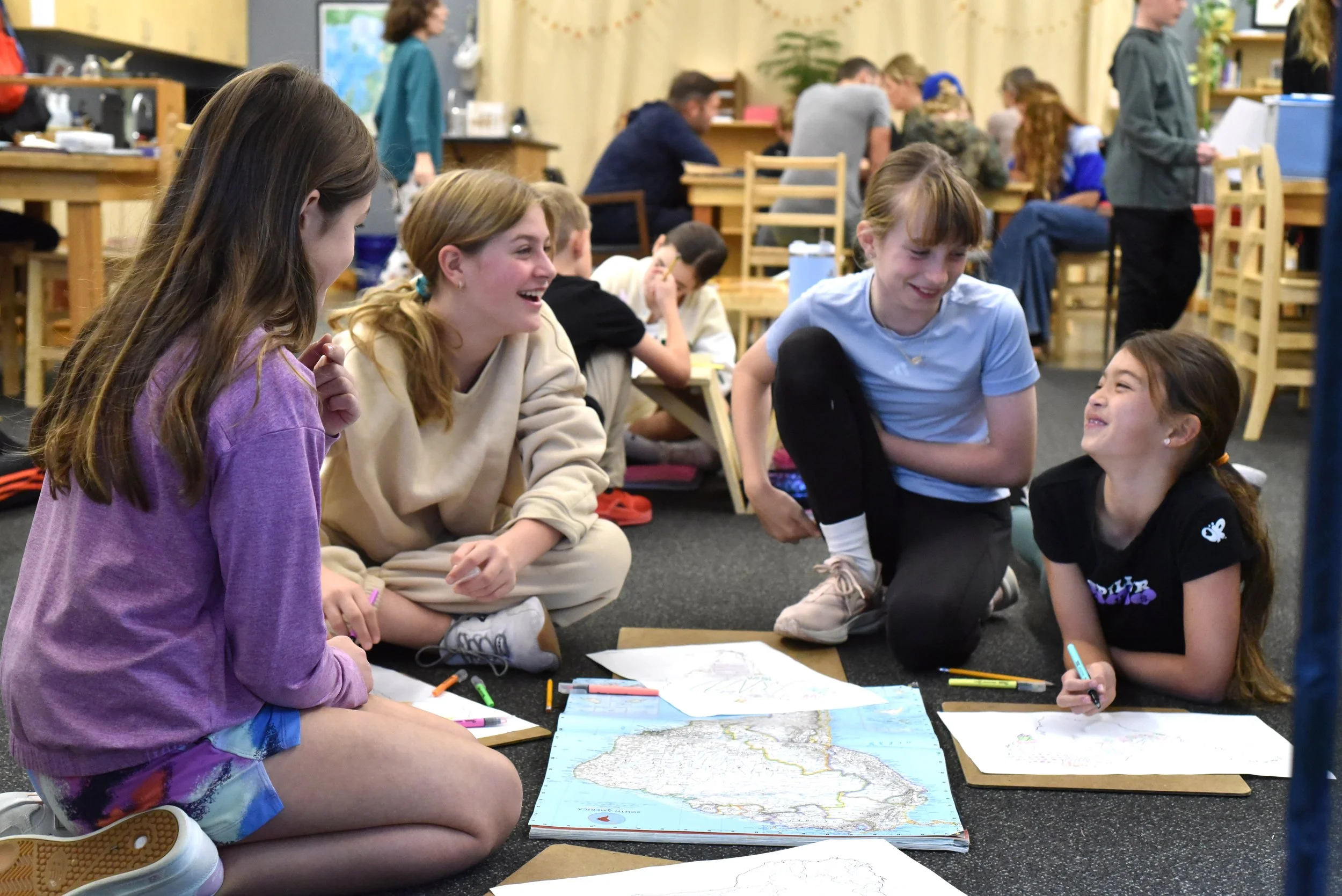
Humanities is taught through the building of children’s understanding of and gratitude for those who came before them while sparking interest to encourage their own studies.
-
Great Lesson: Coming of Humans
Learning about earth history and its formation, plant and animal evolution, history of human civilizations, migration and settlements of humans, timelines, time, and natural resources
Exposure to Michigan History, its economy, and Anishinaabe history, structure and function of governments, rights of the people
Learning of U.S. History and its Indigenous peoples, colonization, United Nations, country research, global issues, culture, languages and religions of the world, current events and social justice
Study of the passage of time: Telling time, The passing of time: days, months, decades, centuries, millennia, Calendar, Timeline of historic civilizations, events, people, and inventions
Study of the evolution of tools, shelter, climate and land changes, and agriculture
Study of the fundamental needs of humans: food, water, shelter, defense, culture, transportation, spiritual, self-expression
Study of migration: reasons and effects
Study of human settlements and relationships
Study of one’s own country, state, and city and changes over time
Introduction to a working government; both state and federal
The study of past, present, and future by demonstrating chronological thinking
Learning about humans world geography through the study of interdependence of humans, economic geography, labeling continent maps with countries, waterways, cities, global issues, and human impact
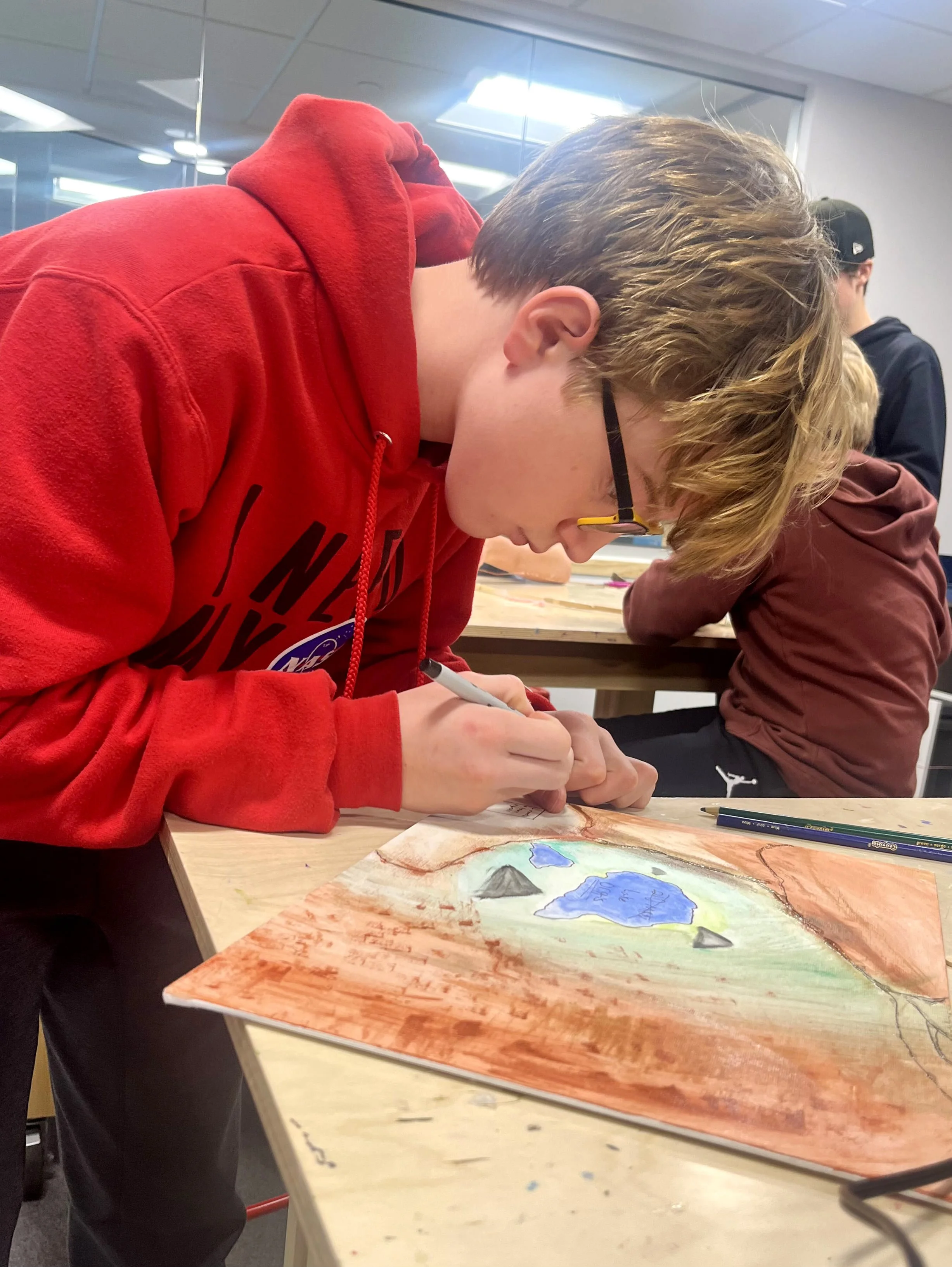
Junior High: Humanities
Humanities is taught through exploring the causes and effects of human pursuits in all fields of study throughout history, presently, and what may be on the horizon.
-
Learning about the implications of humans' actions on the environment through place-based learning and interest-driven research projects.
Exploring the relationship between humans and their natural environment, including contrasting perspectives of European, American, and Indigenous cultures.
Analyzing the elements of human social organization in the study of non-industrial human civilizations.
Understanding Traverse City's "place" in the world, historically as well as presently, due to its geology, climate, resources, economy, and culture
Studying the pre- and post-colonial “Americas,” including pre-colonial civilizations and the short and long-term consequences of colonization on Indigenous peoples of the “Americas.”
Evaluating the build-up to the American Revolution, including the ideological foundations of the U.S. Constitution.
Examining the Constitutional compromises and subsequent sociocultural, economic, and geopolitical factors that perpetuated slavery, divided the States, and led to the US Civil War.
Researching the Industrial Revolution in the United States, including sociocultural, ecological, and technological transformations.
Exploring past and present social movements that have shaped the United States, from the end of the Civil War to the present.

Science
“I have observed for myself the exuberance, the generosity with which the nature of the child responds to scientific education. This observation left me thoughtful and filled with awe; and I became a faithful follower of the child’s spirit.”
Maria Montessori, Citizen of the World, p. 78
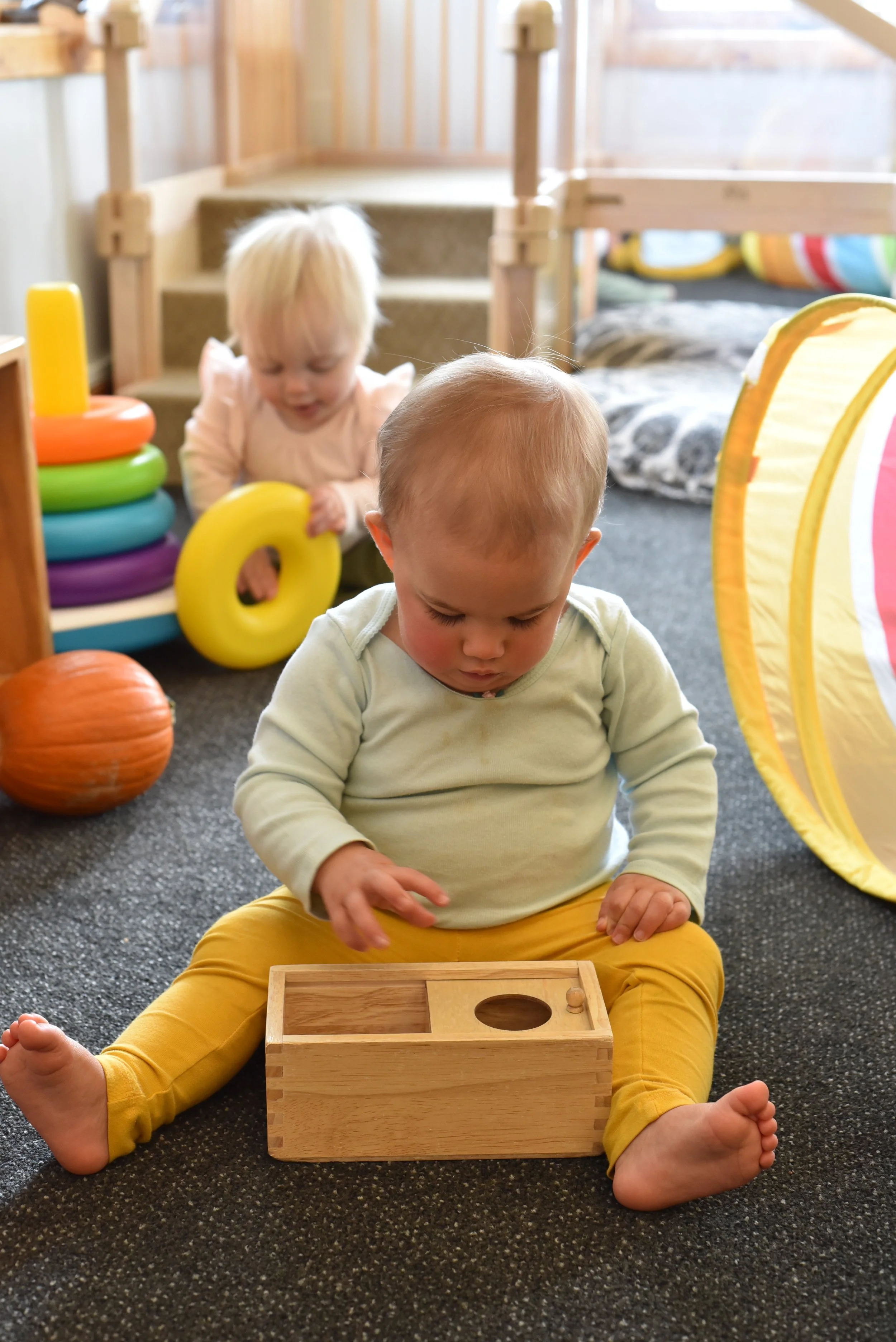
Nido: Science
Science is taught indirectly through classroom materials, sensorial activities, outdoor exploration, and conversation.
-
Exploring basic concepts like objects in motion stay in motion, objects cannot occupy the same space
Observing seasonal changes
Observing of living creatures (fish) and plants through pet and plant care
Activities include rolling materials, gross motor development through trial and error, and language from adults
Learning names of body parts
Learning about consent and how to be safe with other’s bodies

YCC: Science
Science is taught indirectly and directly through classroom materials, sensorial activities, outdoor exploration, and conversation.
-
Observing of living creatures (fish) and plants through pet and plant care
Life cycle activities
Gardening
Simple science activities like making bubbles with soap and water
Baking/cooking
Talk, read, and sing about different body parts
Learning about consent and how to be safe with others’ bodies
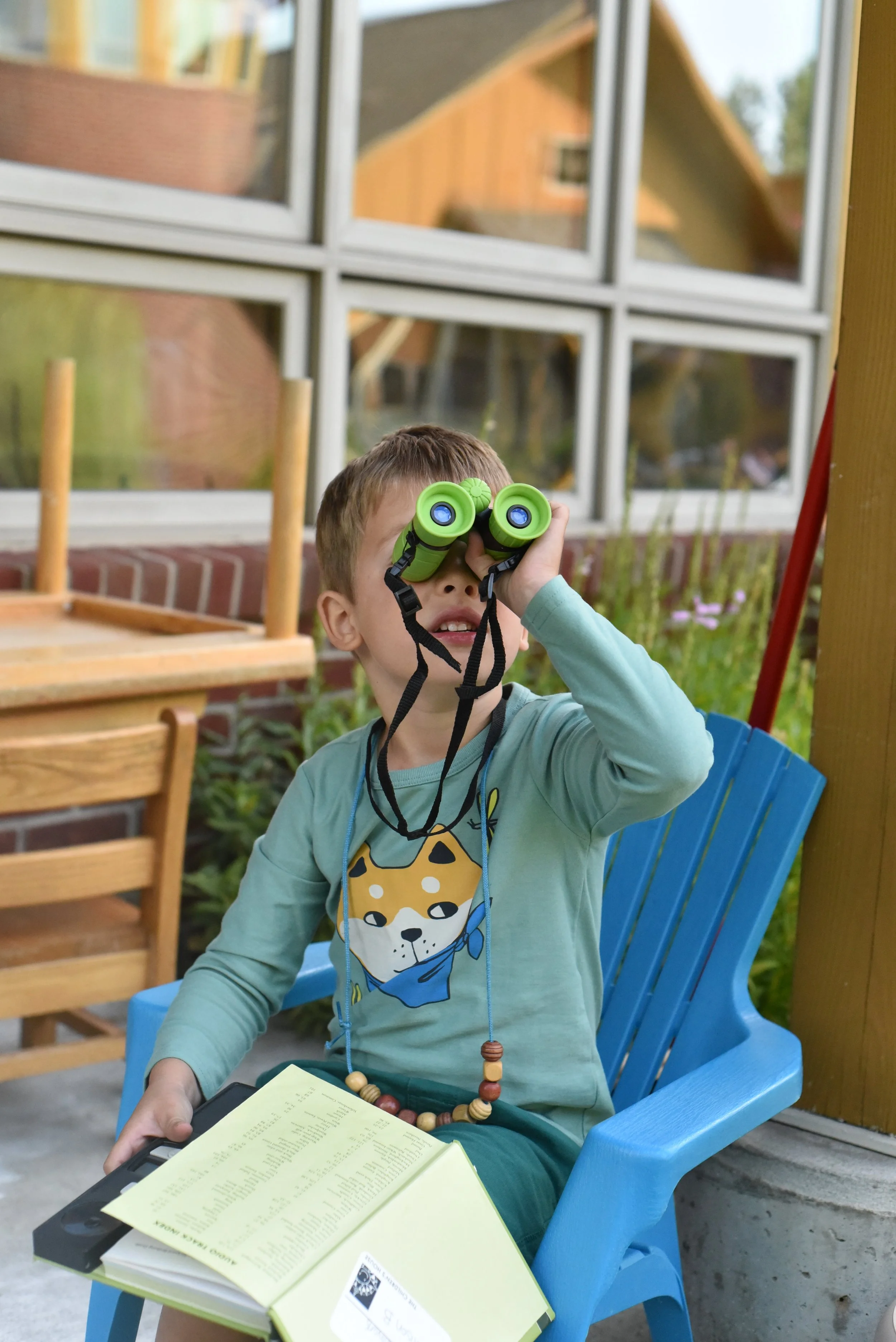
Primary: Science
Science is taught by experimentation, scientific reasoning, appreciation of life and awareness of the interdependence and interrelatedness of nature, encouraging critical thinking and independent inquiry of the natural world.
-
Appreciation of the local ecosystem
Consciousness of consumption and minimizing food waste
Learning of the human body
States of matter
Kinds of clouds
Weather systems
Environmental learning through campus and classroom gardens
Comparing and contrasting between living/ non-living and vertebrate/ invertebrate
Studying the classifications of animals, herbivores, carnivores, omnivores, the life cycle, the water cycle, preservation and conservation, and plant and flower dissection
Baking/cooking
Comprehensive study of the solar system
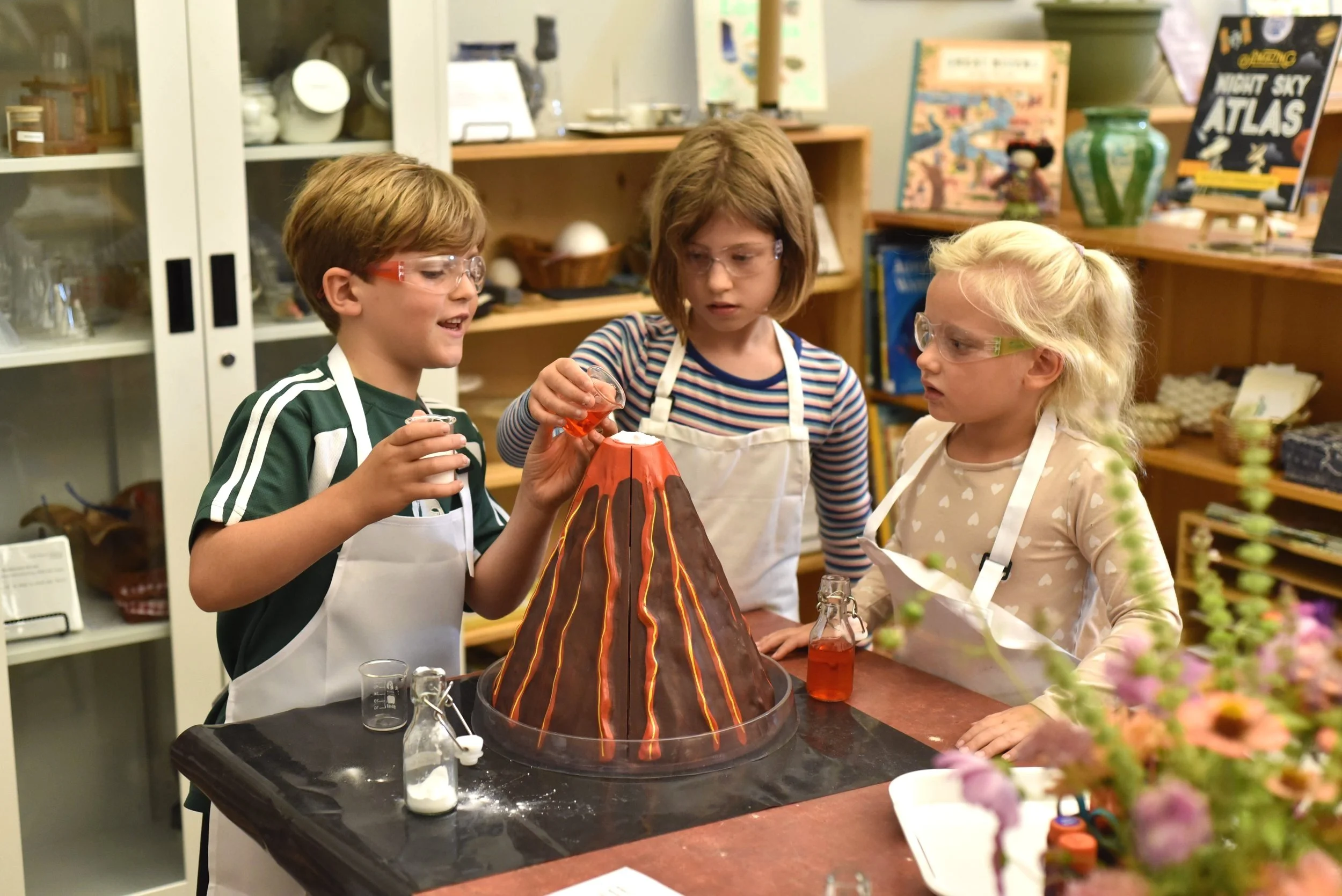
Lower Elementary: Science
Cosmic Education starts in the sciences. From here all other subjects are incorporated. Elementary science is taught with real materials, hands-on exploration, growing an understanding that everything in the universe is interconnected. These concepts are taught through experimentation, scientific reasoning, and an introduction to the scientific method.
-
Great Lesson: Story of the Universe, Story of the Coming of Life
Conceptual understanding of the properties of solids, liquids, and gases and the laws they follow
Learning the fundamental needs of the plant: light, water, warmth, nutrients
Understanding the functions, parts, adaptations and classification of leaves, roots, stems, flower, fruit and seed
Introducing ecosystems and interdependencies of the natural world
Introducing zoology and classification of animals based on the five vertebrate classes and invertebrates
Studying effects of the environment on living things
Planning and conducting scientific investigations and documenting observations through illustrations and words
Collaboration to problem solve and come up with new ways and inventions to solve current problems
Learning about the evolution of the universe
Studying composition of the Earth with the introduction of gravity and attraction, rotation and revolution of the Earth and moon, relationships of the sun, earth, and moon, time zones, latitude and longitude, solstices, equinoxes, and seasons, temperature zones, and cardinal directions
Studying of forces, magnetism, climate, atmosphere, vitality of rivers, landforms, political maps, forces and effects of water, relationship between humans and water

Upper Elementary: Science
Cosmic Education starts in the sciences. From here all other subjects are incorporated. Elementary science is taught with real materials, hands-on exploration, growing an understanding that everything in the universe is interconnected. These concepts are taught through experimentation, scientific reasoning, and an introduction to the scientific method.
-
Great Lessons: Story of the Universe, Story of the Coming of Life
Conceptual understanding of the properties of solids, liquids, and gases and the laws they follow
Learning about the properties of matter, states of matter, ways of combining, saturation, attraction and gravity, light and energy
Learning about the Sun and Earth and its rotation, time zones, seasons, lunar phases, solstices and equinoxes, latitude and longitude, effect of physical geography on climate, and rock formation
Exposure to the work of air and water through winds, land and sea breezes, seasonal winds, ocean currents, erosion, rivers, rains, waves, ice, water cycle, vegetation, and human settlement
Learning about botany through the needs of the plant and the effects of water, light, warmth and photosynthesis as well as parts of the plant
Learning about zoology through animal classification, body function, and use of a microscope
Understanding ecosystems, abiotic/biotic, and biodiversity
Understanding functions, parts, and interdependence of human body systems
Planning and conducting scientific investigations and documenting observations through illustrations and words
Collaboration to problem solve and come up with new ways and inventions to solve current problems
Dissection
Junior High: Science
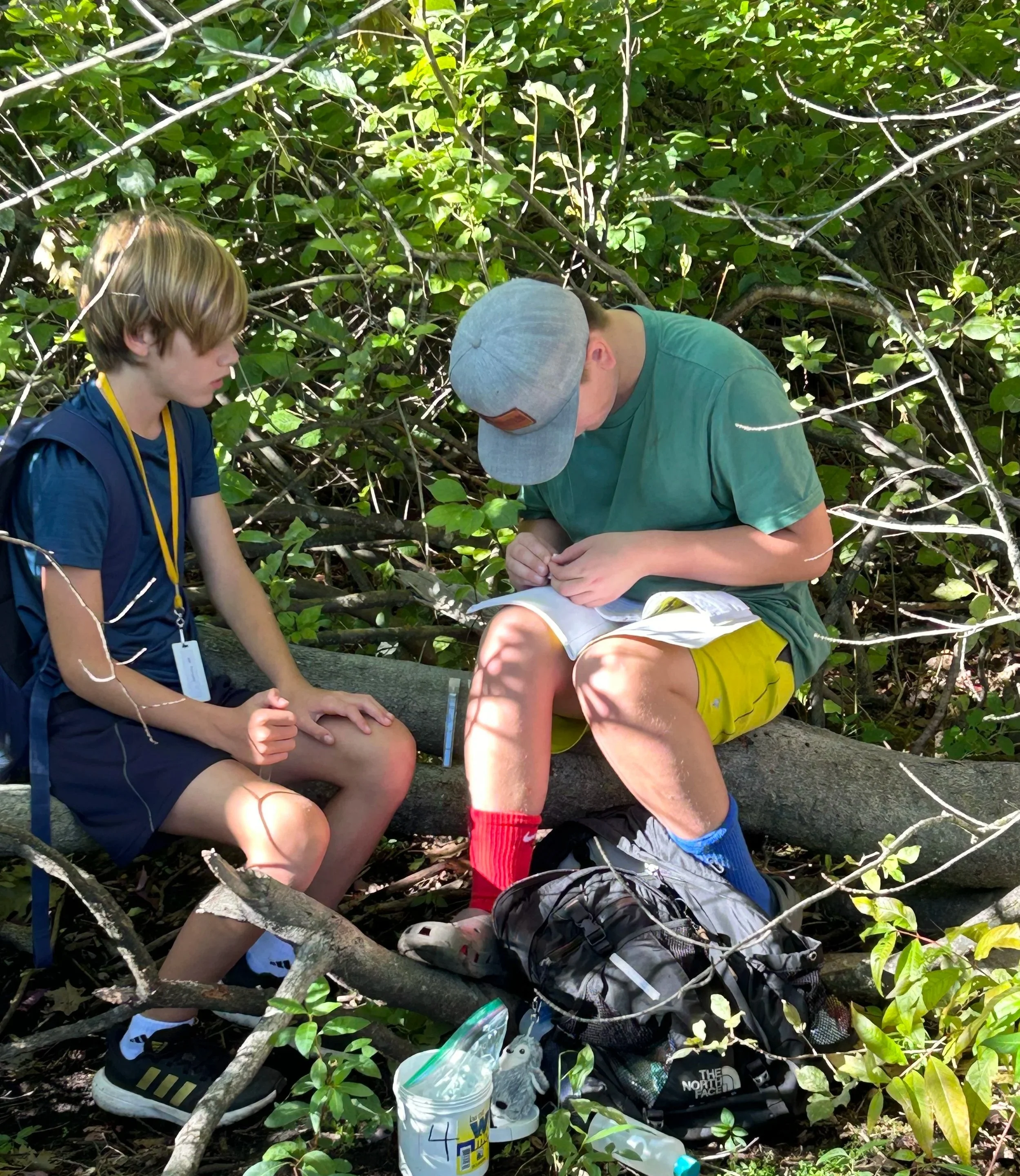
Science is taught and explored through a place-based approach that incorporates English Language Arts, math, history, and cultural studies.
-
Studying diversity and ecology of Michigan natural communities such as sand dunes, marshes, bogs, deciduous forests, coniferous forests, mixed wood forests, meadows, prairies, inland lakes, the "big lakes," rivers, and islands.
Measuring various ecosystem parameters such as number and types of species, soil, and water quality to track and compare and contrast the well-being of the ecosystems.
Learning about diverse historical and cultural perspectives regarding land, water, and air use and protection.
Exploring the geological makeup of Michigan, which includes copper, iron, limestone, and petrochemicals, and how Michigan’s geology and ecology shape our economy.
Studying the foundational principles, as well as the human applications of chemistry, including environmental and historical studies, industry/manufacturing, food production and preparation, and agriculture.
Studying the engineering and design process, and the ethics of technology through robotics.

Practical Life
“How he is to use what he has learned is a task for his own conscience, an exercise of his own responsibility. He is thus freed from the greatest of all dangers, that of making an adult responsible for his actions, of condemning his own conscience to a kind of idle slumber.”
~ Maria Montessori: The Discovery of the Child, p. 96
Nido: Practical Life
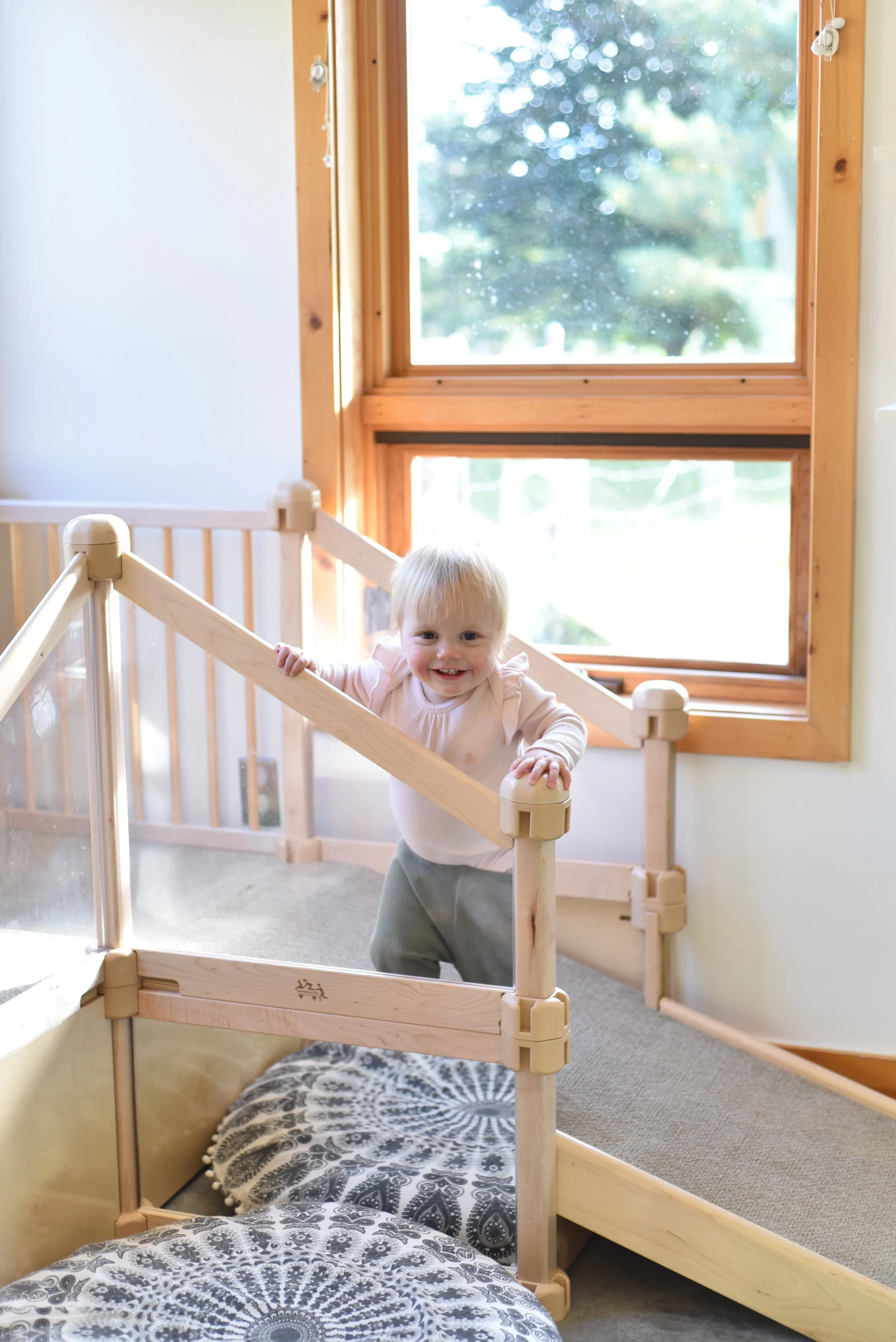
Practical life is intentionally integrated within the daily activities of the classroom so children can flourish as independent humans who also thrive within a community.
-
Learning to live within a community and adapt their time and place
Refining gross and fine motor skills
Developing a positive relationship with food through exposure
Integrating of mind, body, and will to promote healthy social-emotional learning
Learning to feed on their own by grasping utensils, drinking from an open cup or straw, eating group meals with modeling
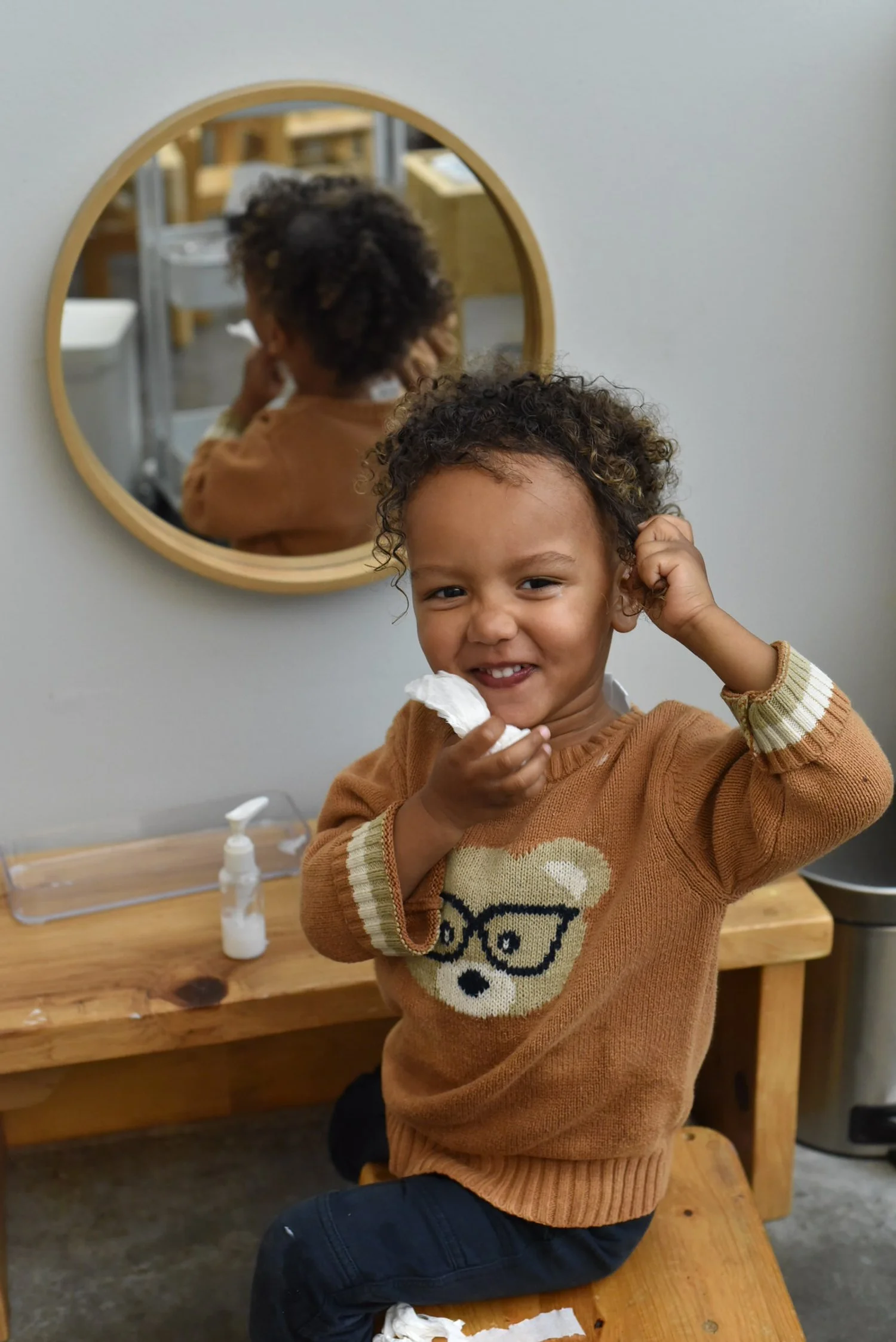
Learning care for body with assistance by washing hands, wiping nose, and extending arms into sleeves during dressing
Adapting to and caring for their environment with support through opening and closing of gates, closing the dishwasher, wiping a spill, and simple cleanup
Co-regulation with adults in environment
YCC: Practical Life
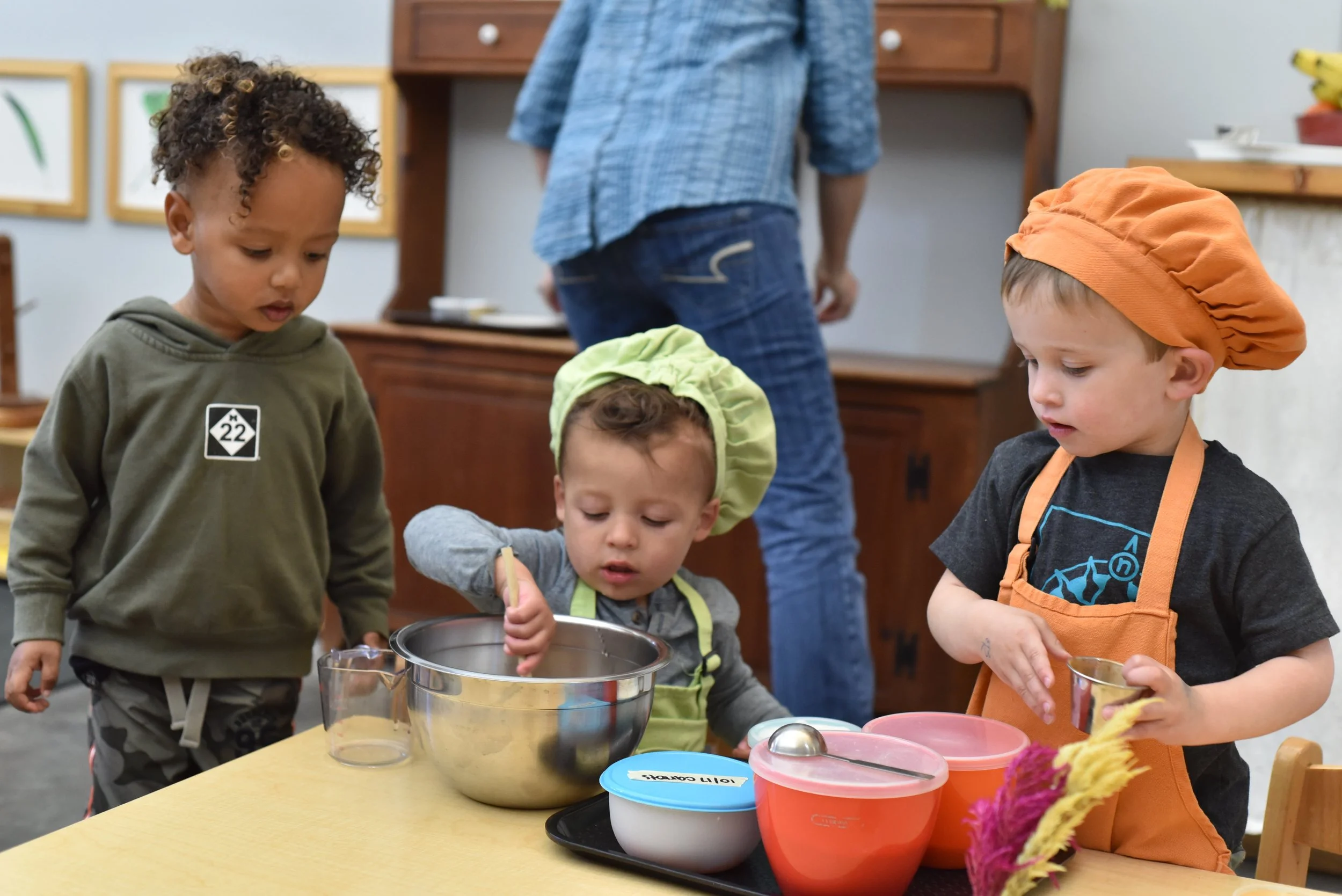
Practical life is intentionally integrated within the daily activities of the classroom so children can continue to flourish as independent humans who also thrive within a community.
-
Refining gross and fine motor skills
Continuing to develop a positive relationship with food through exposure
Building their social and emotional development
Refining cognitive function like regulation, receptive and expressive language, sequencing, and concentration
Learning to care about their hygiene by brushing teeth and hair, wiping nose, washing hands, dressing self, and toileting independence
Caring for a community by setting the table, sweeping, mopping, dusting, washing dishes, wiping up spills, serving others, scrubbing tables, and chairs, washing windows, feeding classroom pet, arranging flowers, and more
Gains a plethora of skills to self-regulate, and expresses feelings which match a situation

Primary: Practical Life
Practical Life at the primary level is a continuation of the set of life skills children have been working on since infancy. Additionally, a great amount of modeling is done to build a culture of reciprocated grace and courtesy within our community. Each classroom is a microcosm of the greater world, and peace education begins now.
-
Developing skills such as concentration, coordination of movement, sense of order, independence, and self-esteem when caring for oneself and our environment
Preparation of skills for reading left to right, estimation and measurement for math
Developing social skills, responsibility and respect for the community
Understanding health and fitness to develop physically literate children who gain confidence to enjoy a lifetime of physical activity
Developing social and emotional awareness by self and co-regulation, eye contact, empathy toward others, advocating for self and others, understanding boundaries, naming emotions and anatomy, verbalizing requests for consent, supporting varying attachment styles, and breathing and meditation
Caring for their community by balancing individual needs with the needs of the community through food preparation, caring for plants, sewing, and Grace and Courtesy Lessons which include how to ask for help, tuck in a chair, and be a great guest
Learning to care for themselves by washing hands, hair care, tying a bow, and continued hygiene practice
Practicing time management and being a self-directed learner
Developing physical confidence through motor skills, movement patterns, concept strategies and tactics like offense and defense, gaining a knowledge of nutrition, personal and social responsibility by following rules and having strong communication, and recognizing the value of physical activity
Lower Elementary: Practical Life
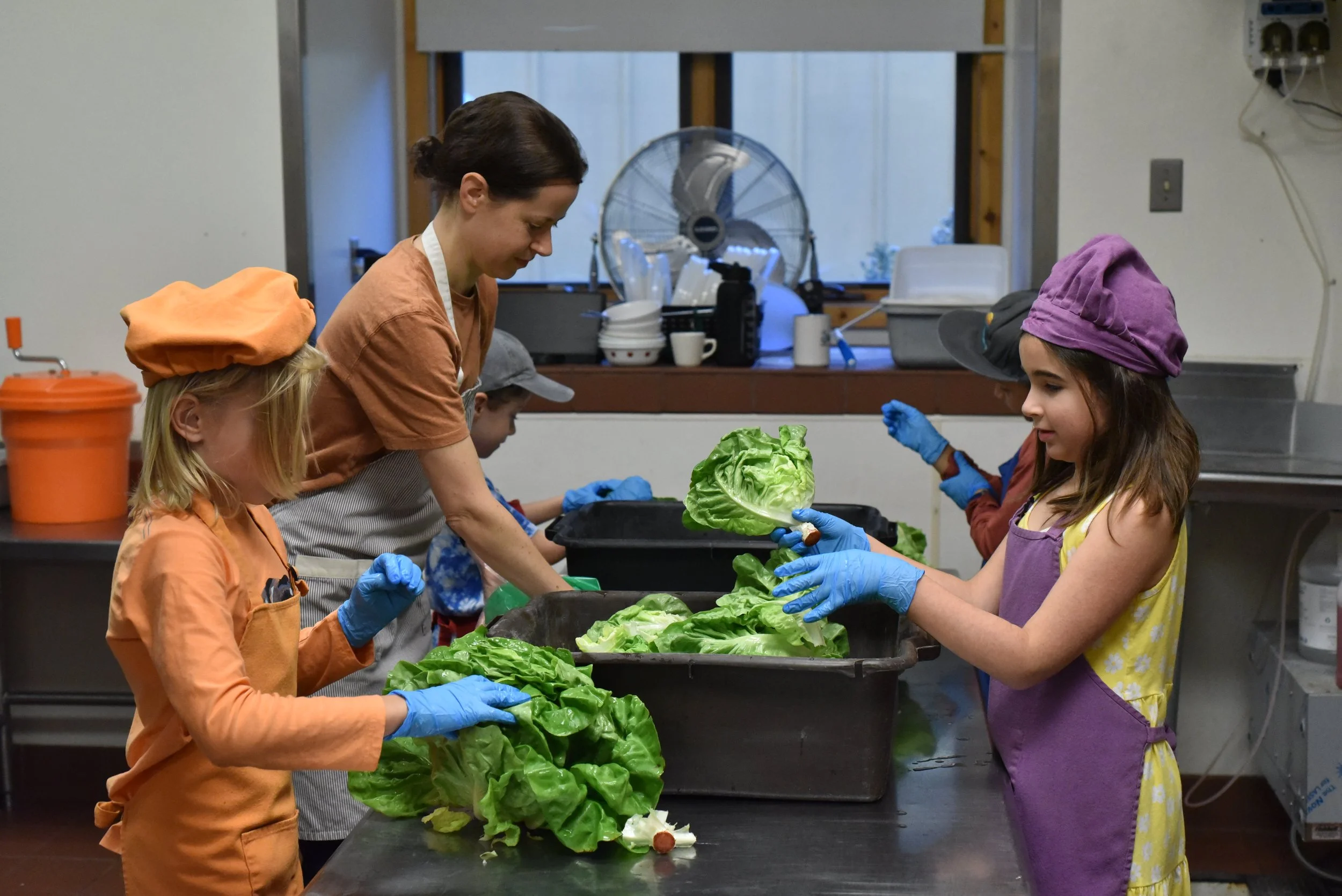
Practical life at the lower elementary responds to the child’s need to be a part of the community. The practices of grace and courtesy, freedom with responsibility, and the interdependence of humans are a natural continuation of the work from Primary.
-
Develop social skills for living in a community
Development of responsibility for self as a learner
Care of the environment through classroom jobs
Using problem-solving strategies like conflict resolution and one-on-one meetings to build resilience and confidence
Practicing accountability to self and classmates

Upper Elementary: Practical Life
Understanding one’s place in the greater community, beyond the walls of the classroom moving into the whole school and community outside of the school, is a task the upper elementary child seeks out. Honing skills for communication, community responsibilities, and interdependence continue in upper elementary. Practical life integration is also supported by planning and executing activities in the greater community and for the school as a whole.
-
Describe a range of emotions and the situations that cause them
Describe and demonstrate ways to express emotions in a socially acceptable way
Plan and execute outings to further individual or group studies by meeting with specialists or visiting related sites
Plan and execute food and activities for trip to New York for Montessori Model United Nations, for the annual camping trip and for Field Day
Using problem-solving strategies like conflict resolution and one-on-one meetings to build resilience and confidence
Practicing accountability to self and classmates
Care of the environment through classroom jobs

Junior High: Practical Life
Practical life is integrated through group travel, classroom leadership roles, and continued social-emotional development as adolescents learn how to build community both within and outside of the classroom.
-
Self-identifying behaviors which create stress, or block growth for the individual and/or community, and then cultivate strategies to change such behaviors, or adapt
Identifying, interviewing for, and performing at least one leadership position within the community, first as an apprentice, and then as a leader
Planning and executing travel such as campground camping, backwoods backpacking, and urban travel
Developing social skills such as conflict resolution, caring for others, effective communication, resiliency, adaptability, and accountability
Exploring self through identifying personality characteristics and patterns through character reflection, journaling, choosing areas of study, debate, literature seminar, art, music, and physical education
Understanding human growth and development through education covering physical changes, gender and sexual identity/expression, healthy relationships, and reproductive health
Participating in ongoing leadership roles such as trip planning, class supervision, care of the environment, biographer, conflict resolution, photographer, yearbook editor, IT, librarian, classroom host, and/or member of the student senate

Sensorial
“The sensory education which prepares for the accurate perception of all the differential details in the qualities of things, is, therefore, the foundation of the observation of things and of phenomena which present themselves to our sense; and with this, it helps us to collect from the external world the material for imagination.”
~Maria Montessori: The Advanced Montessori Method Volume I, p. 191
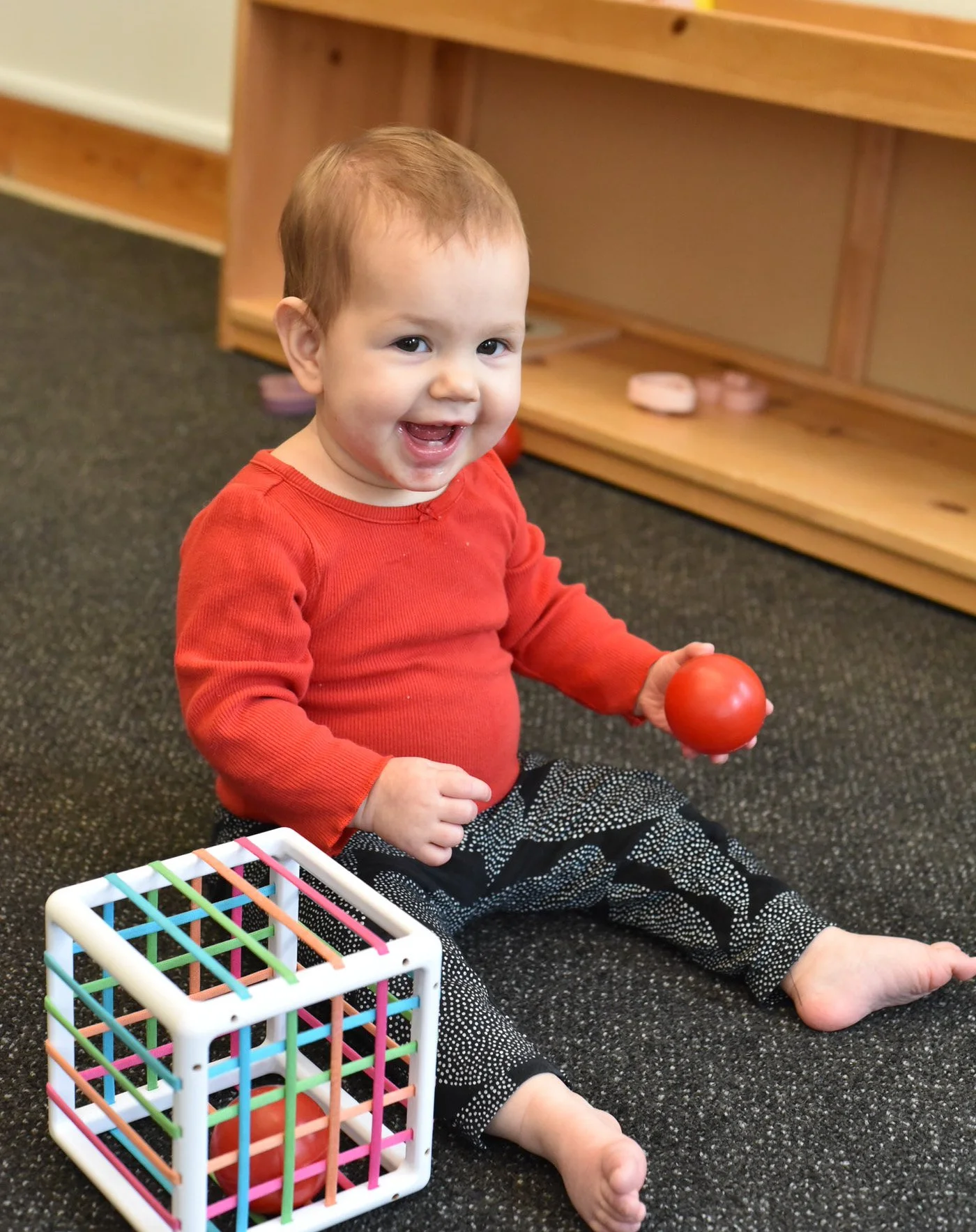
Nido: Sensorial
All of a child’s movements and experiences give them an enormous amount of sensorial information; they acquire this information during the first three years of life and then categorize it from ages three to six. Materials are designed to be closed-ended and self-correcting to allow for independent exploration and development of the senses.
-
Sequencing
Concentration
Visual, auditory, tactical, gustatory (taste), stereognostic sensory, and olfactory (smell) experiences
Tracking moving objects without moving head
Raking grasp
Palmer grasp
Hands to mouth
Hand-to-hand transfer at the midline
Intentional grasp and release
Wrist flexion
Pointing
Primitive pincer grasp
Rolling
Sitting with and without support
Batting at objects
Crawling
Pulling to stand
Cruising and other attached walking
Standing independently
Walking
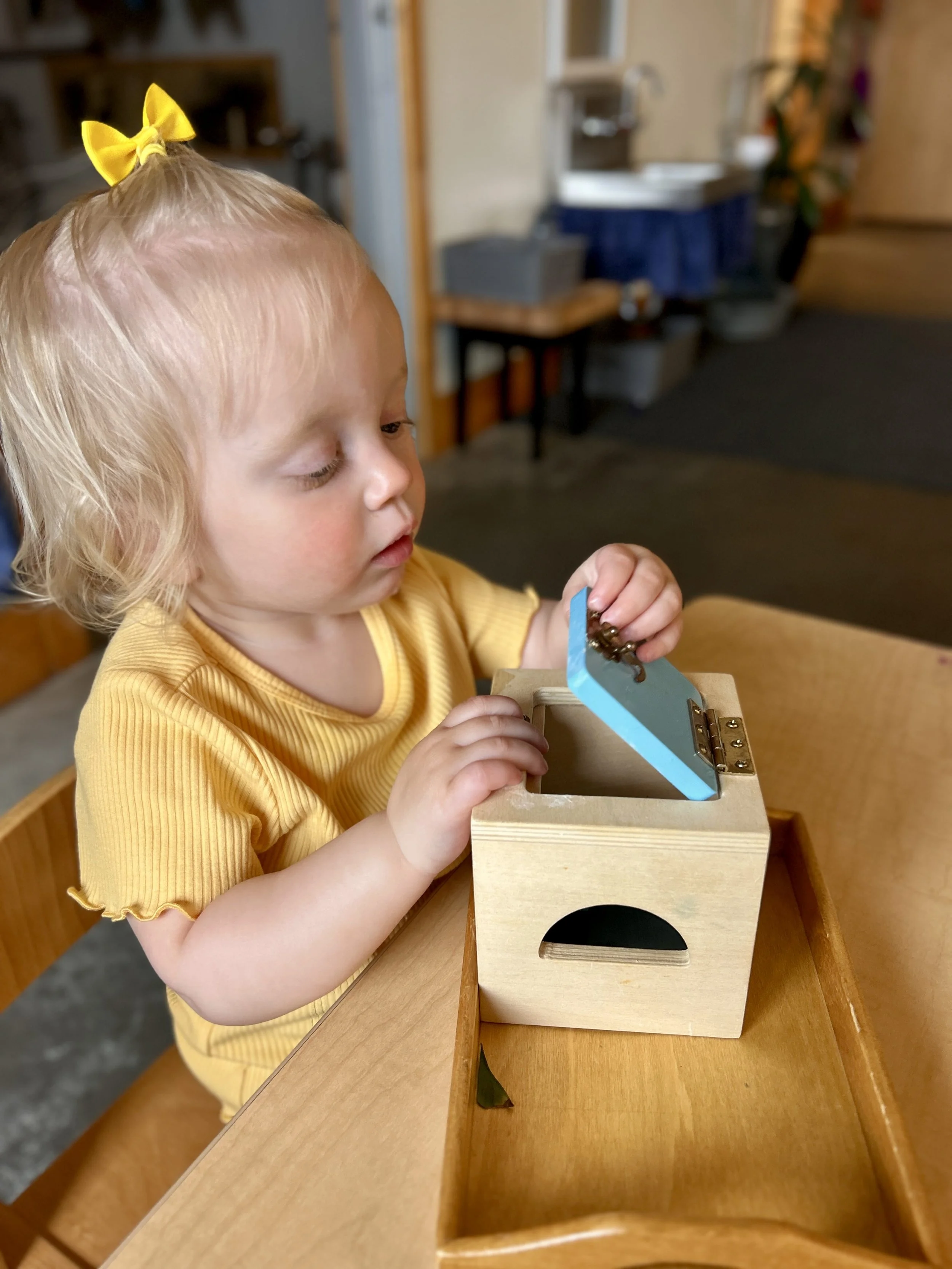
YCC: Sensorial
Children are continuing to acquire sensorial information and beginning to refine motor development skills during their time in the YCC. Materials serve a single purpose and are presented as such, but children are allowed to freely explore materials and learn through their own experiences.
-
Sequencing
Concentration
Visual, auditory, tactical, gustatory (taste), stereognostic sensory, and olfactory (smell) experiences
Refined pincer grasp
Using hands together
All fingers working separately
Carrying
Running
Jumping
Brachiation
Pushing and pulling
Balancing
Dancing
Pedaling
Alternating arms and feet
Spatial awareness
Object permanence

Primary: Sensorial
Life is a culmination of experiences taken in through our senses. The Sensorial materials designed by Dr. Montessori build upon the idea of refining our senses through isolation of skills that vary by differing degrees of complexity. It is through the work of our senses that we are able to engage with and truly experience the world around us, appreciate that which already exists, and create within reality that which previously existed only in our minds.
-
Concentration
Visual, auditory, tactical, gustatory (taste), and olfactory (smell) discrimination
Exploration
Discovery
Observation
Comparison
Reason
Problem-Solving
Spatial reasoning and awareness
Decision making
Large/small voluntary muscle control and memory
Art & Music
“It is movement that interests the child in music, and it is by movement that the very tiny child can arrive at understanding music with considerable delicacy.”
Maria Montessori, The Montessori Approach to Music, p. 32
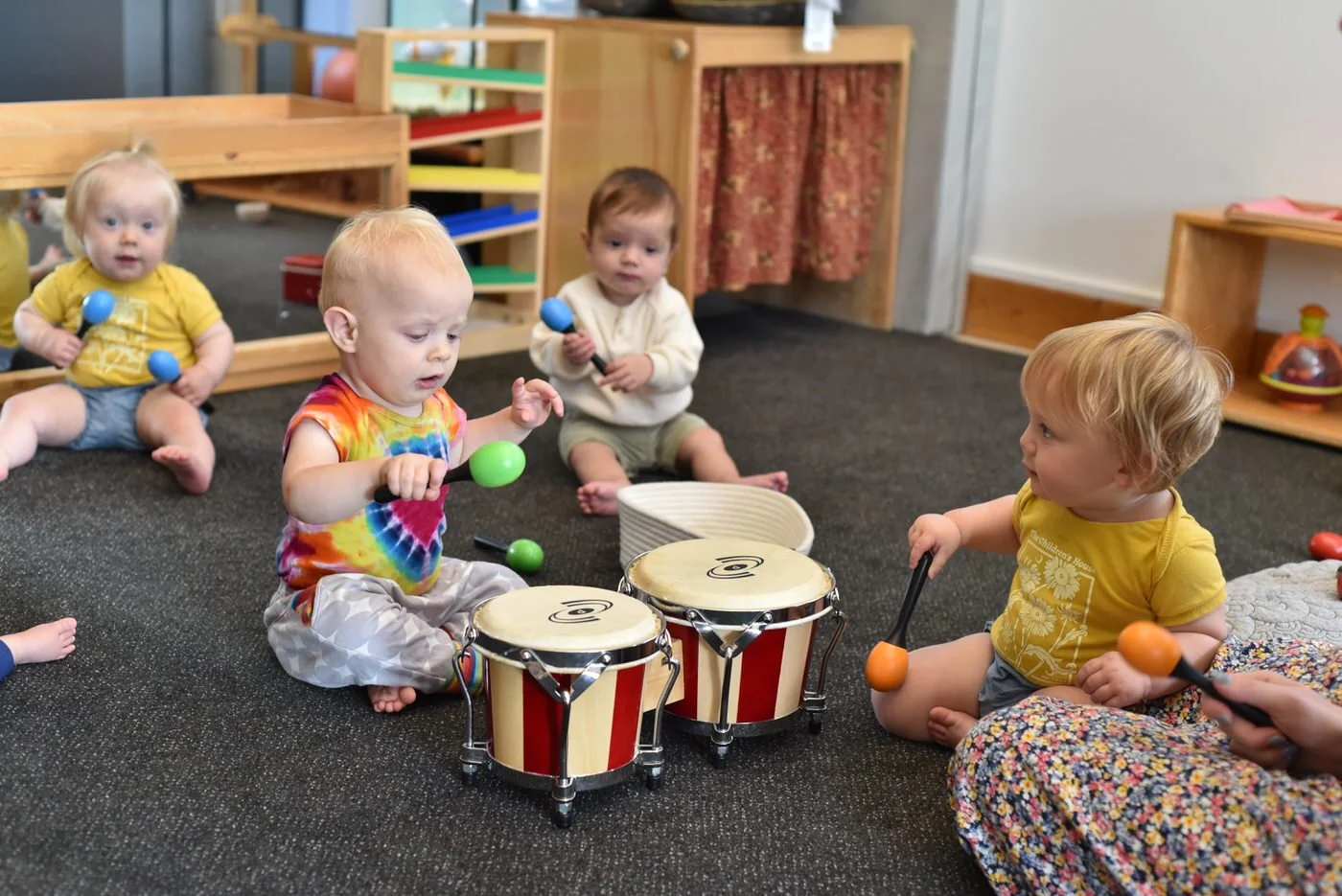
Nido: Art & Music
Art and music experiences help to develop the aesthetic sense and feed the very young child’s need to communicate.
-
Developing communication skills through song
Developing proto-sounds and proto-rhythms
Physical development through movement games
Experiencing single note, percussive musical instruments
Songs
Recorded music
Movement games
Dance
-
Developing pincer grasp
Development of early mark-making
Development of language around form and color
Viewing and discussing displayed artwork
Experiencing books featuring art and artists
Exploration through working with a variety of art mediums like crayons, chalk, and stickers
YCC: Art & Music
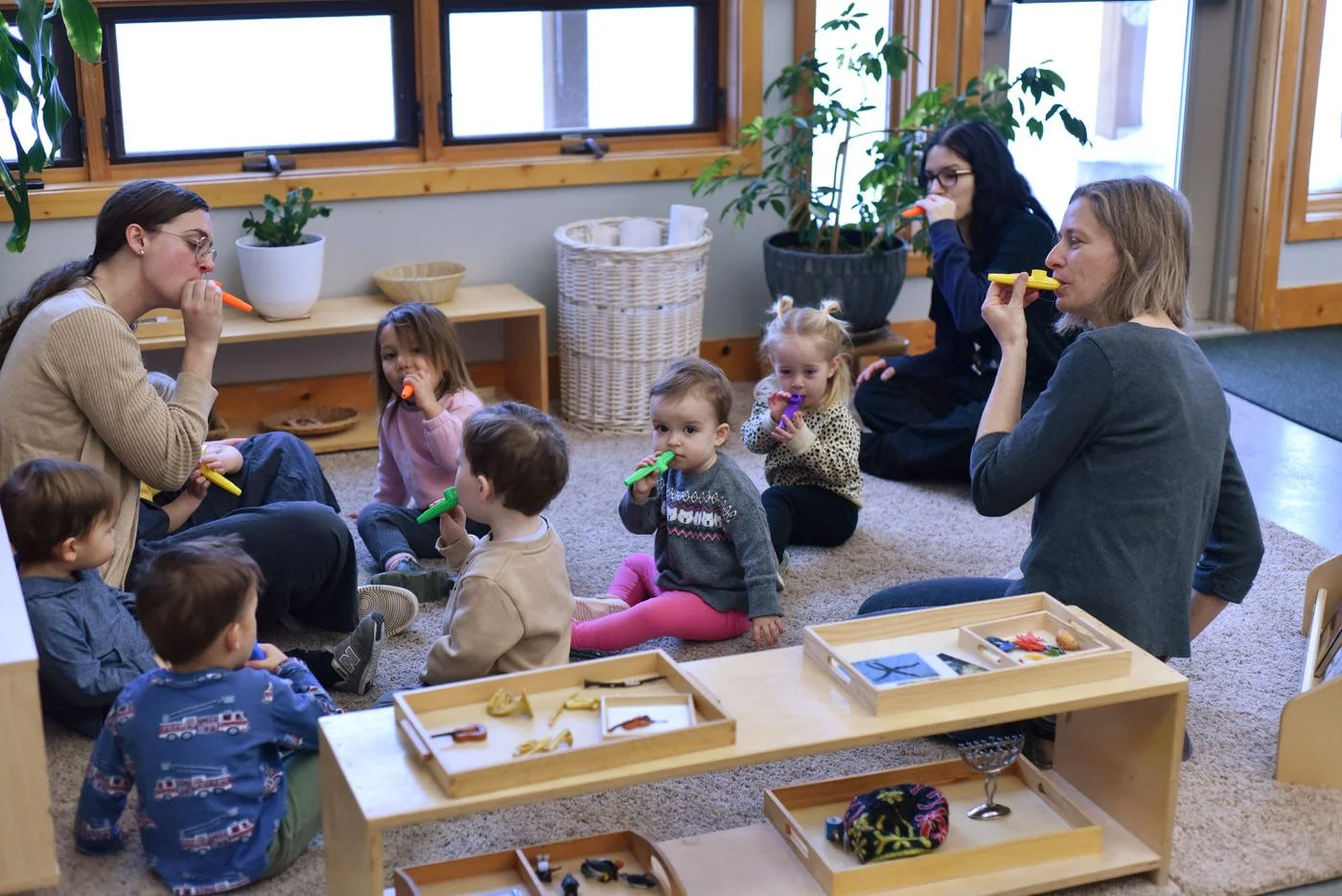
In the YCC environment, the children are exposed to different styles of art through prints, language cards and books. In addition, the children are given the opportunity to explore instruments and songs from around the world.
-
Refining communication skills through song
Physical memory skills through hand motions in songs
Musical instruments
Songs
Recorded Music
Movement games
Dance
-
Refining pincer grasp
Transition through stages of scribbling from “disordered” to “controlled” and finally “named”
Continued development of language around art styles and forms
Viewing and discussing hanging artwork
Experiencing books and language cards featuring different art and/or artists
Exploration through working with a variety of art mediums like paints, crayons, chalk, and stickers
Primary: Art & Music
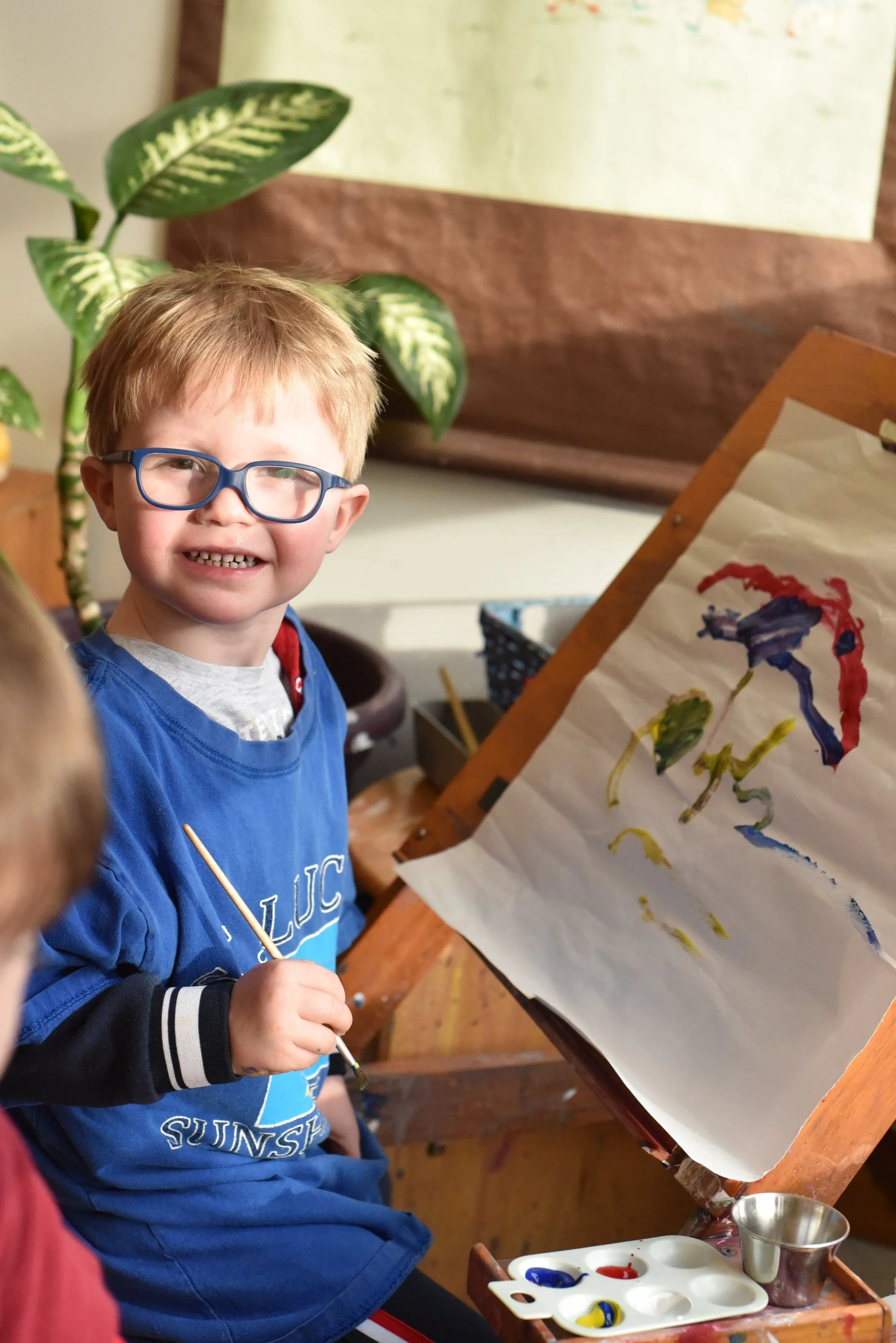
Children will develop creative expression and an aesthetic sense in the fine arts while gaining an appreciation for different styles of music and mediums of art.
-
Developing creative expression, appreciation for music, knowledge of note positions, volume, pitch, whole steps, half steps, and ability to read and compose music
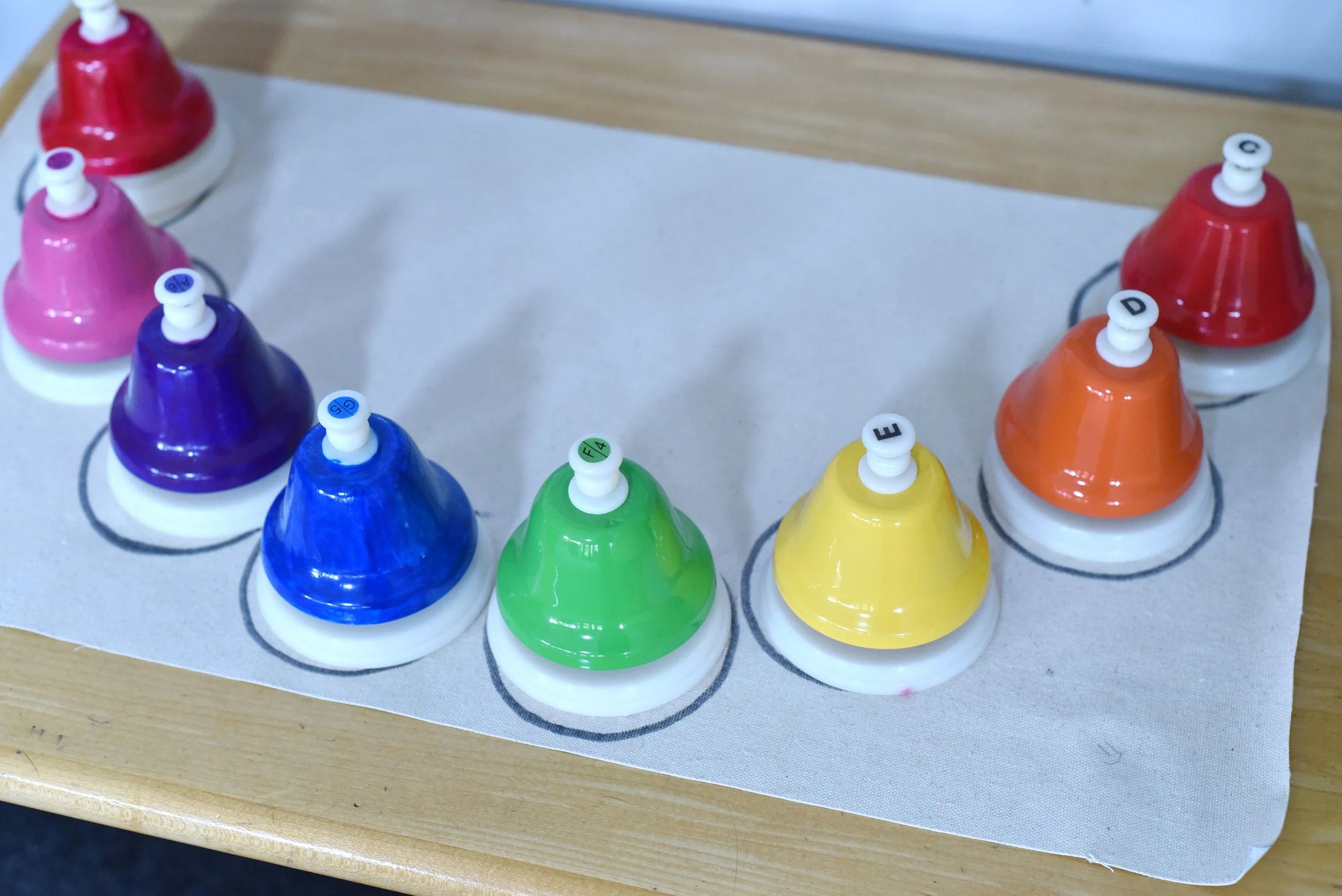
Exposing students to different musical genres and instruments, note names on the numbered staff board, The Bells, reading music, and staff, ledger lines, and G clef
Singing songs around different cultural traditions
Exposing children to various instruments like sleigh bells, tambourines, caxixi while working on body percussion to develop an internal pulse
-
Developing self expression and aesthetic sense of art by coordination of movement, control of one’s hand, pencil grip, lightness of touch, and use of scissors
Introducing children to Elements of Art such as Color Theory, Line, Shape, Form, and Texture
Exposing students to collage, color mixing, cutting stages, drawing, origami, paintings, rubbings, sculpting and artist studies
Introducing children to materials such as graphite, oil pastels, watercolor, collage materials, modeling clay, earthenware clay, and chalk pastels
Lower Elementary: Art & Music
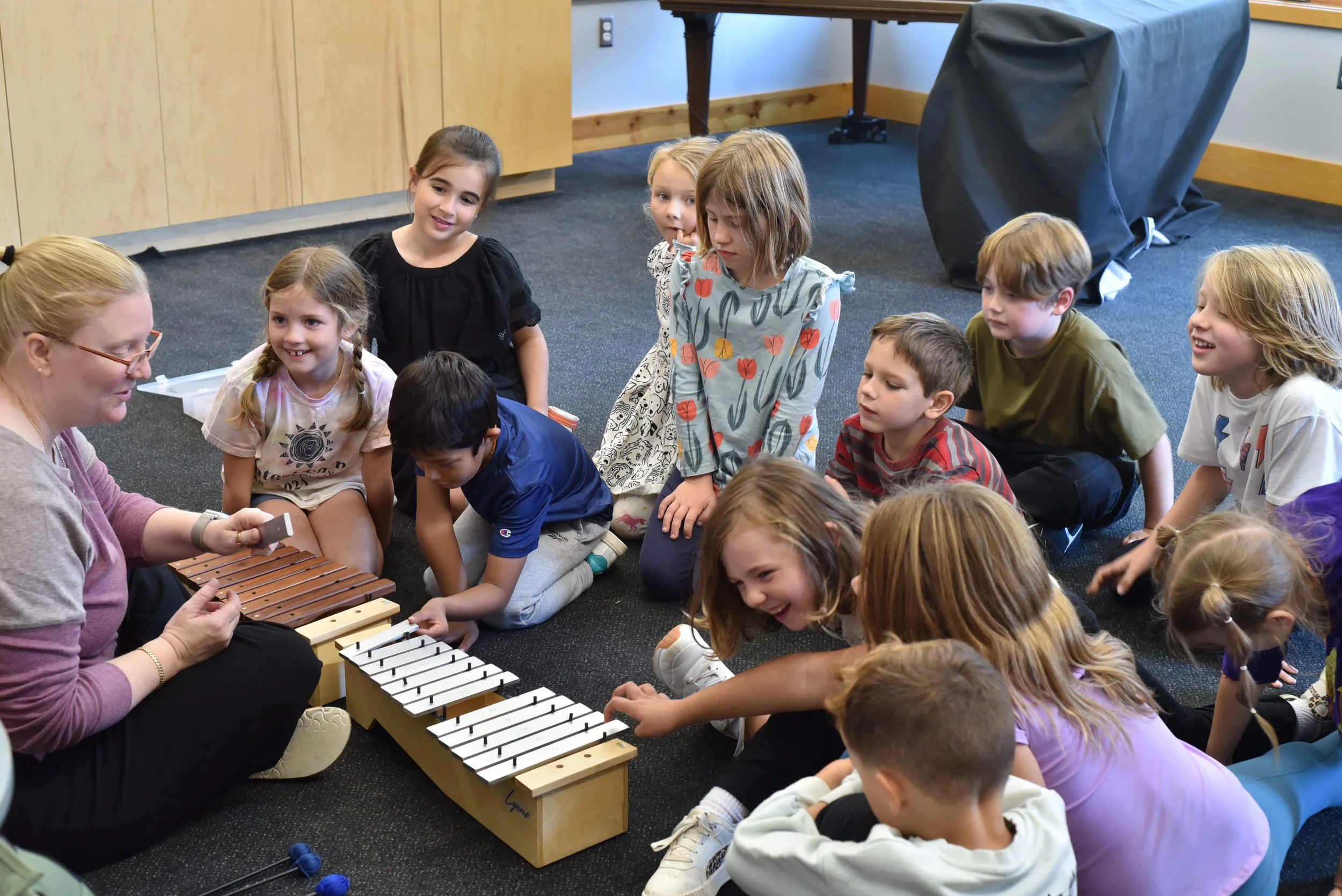
Fine arts curriculum continues to build by focusing more on aesthetics and creative expression in art and in music.
-
Introducing students to reading notes and rhythms as well as pitch, form, and instrument names
Engaging with music and motion as a way to link movement to different musical forms, feelings, and tempo
Building fundamental instrumental playing skills
Using games, books, music nomenclature
Learning about major composers from various nationalities, genders, ethnicities, and cultural backgrounds
Playing several instruments
Creating own compositions
Performing at various Children’s House events throughout the year
-
Learning techniques such as painting, drawing with multiple types of materials, and cutting properly with scissors
Exposing children to materials such as graphite, oil pastels, watercolor, collage materials, modeling clay, earthenware clay, markers, and chalk pastels
Introducing Art History where students observe an artist’s style and create artwork based on that style
Upper Elementary: Art & Music
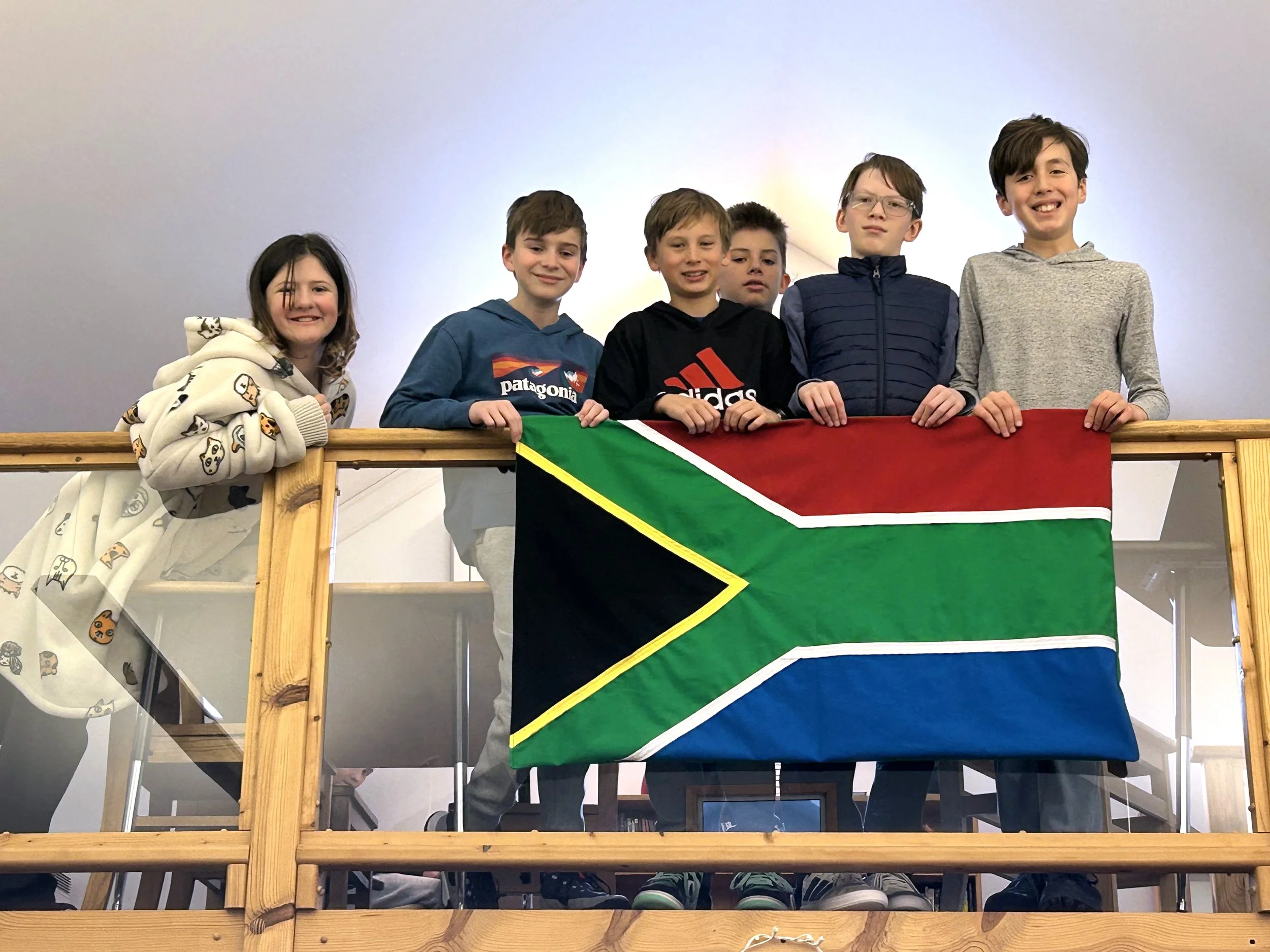
Students develop a more refined understanding of artistic aesthetics, and musically, continue to build on their instrumental and note-reading skills.
-
Building on note and rhythm reading through studying different musical forms, dynamics, timbre, genres, styles, and instrumentation
Working on individual instruments based on sight and sound and sound alone helping to develop critical listening skills
Learning about major composers from various nationalities, genders, ethnicities, and cultural backgrounds
Playing different instruments groups with more distinct parts played simultaneously, i.e. melody and accompaniment
Playing instruments such as Orff instruments, ukuleles, and hand percussion
Singing and performing in a group at various Children House events throughout the year
-
Expanding on creative expression through the Principles of Design and how it is used within artistic works
Introducing Art criticism where students can observe, analyze, and form opinions about art through an increased learning of artistic vocabulary
Lessons on balance, contrast, movement, pattern, and rhythm
Exploring Elements of Art, focusing on space and value practicing various forms of perspective in drawing
Junior High: Art & Music
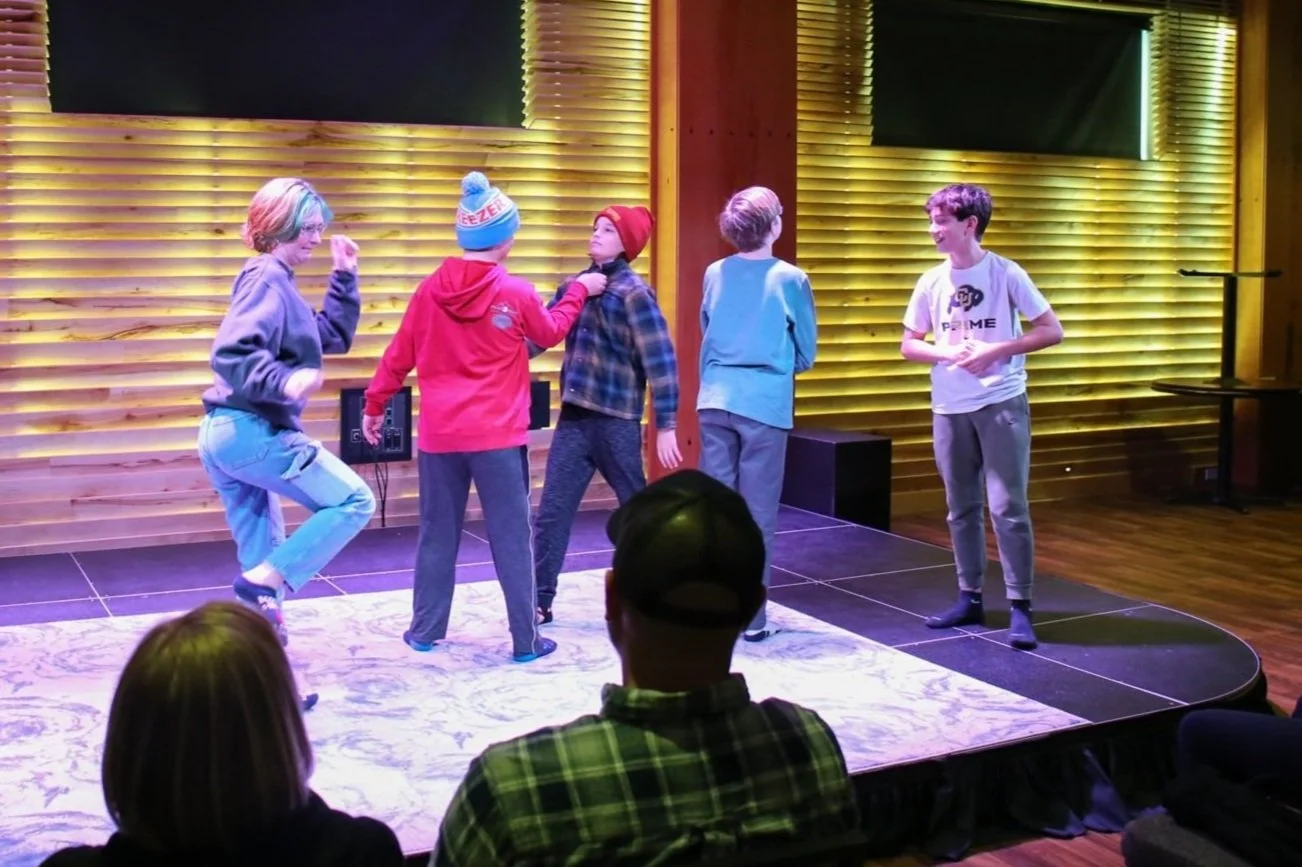
Art and music facilitate self-expression and forge deeper connections with curricular studies.
-
Working with professionals in the field to explore the careers and roles available, and understand the contributions of music to society
Analyzing the elements of song components, such as music and lyrics
Experimenting in songwriting with piano, guitar, voice, and digital audio workstations to produce and record songs and fragments
Applying new techniques of writing (including style, form, contrast, and phrasing)
Learning and performing pieces for community events
-
Working with professionals in the field to explore the careers and roles available, and understand the contributions of art to society
Analyzing and appreciating the elements of an artistic work within its historical context
Connecting to curricular studies and humanities content through art media of their choice
Exploring dimensions of the self through guided art activities
Wellness
“The education of even a small child, therefore, does not aim at preparing him for school, but for life.”
Maria Montessori
Social and Emotional Development
The consideration of the social and emotional wellness of each child is not separated from other aspects of education. Recognizing the uniqueness of each one, honoring the development of the child is in the consciousness of everything at school. Here we focus on a few aspects of this support for the child, even when these attributes are already a thread throughout the school.
Social development is a child’s ability to build and maintain meaningful relationships with adults and peers.
Emotional development involves recognizing, expressing, and managing one’s own emotions, as well as responding appropriately to the emotions of others.
Physical Education
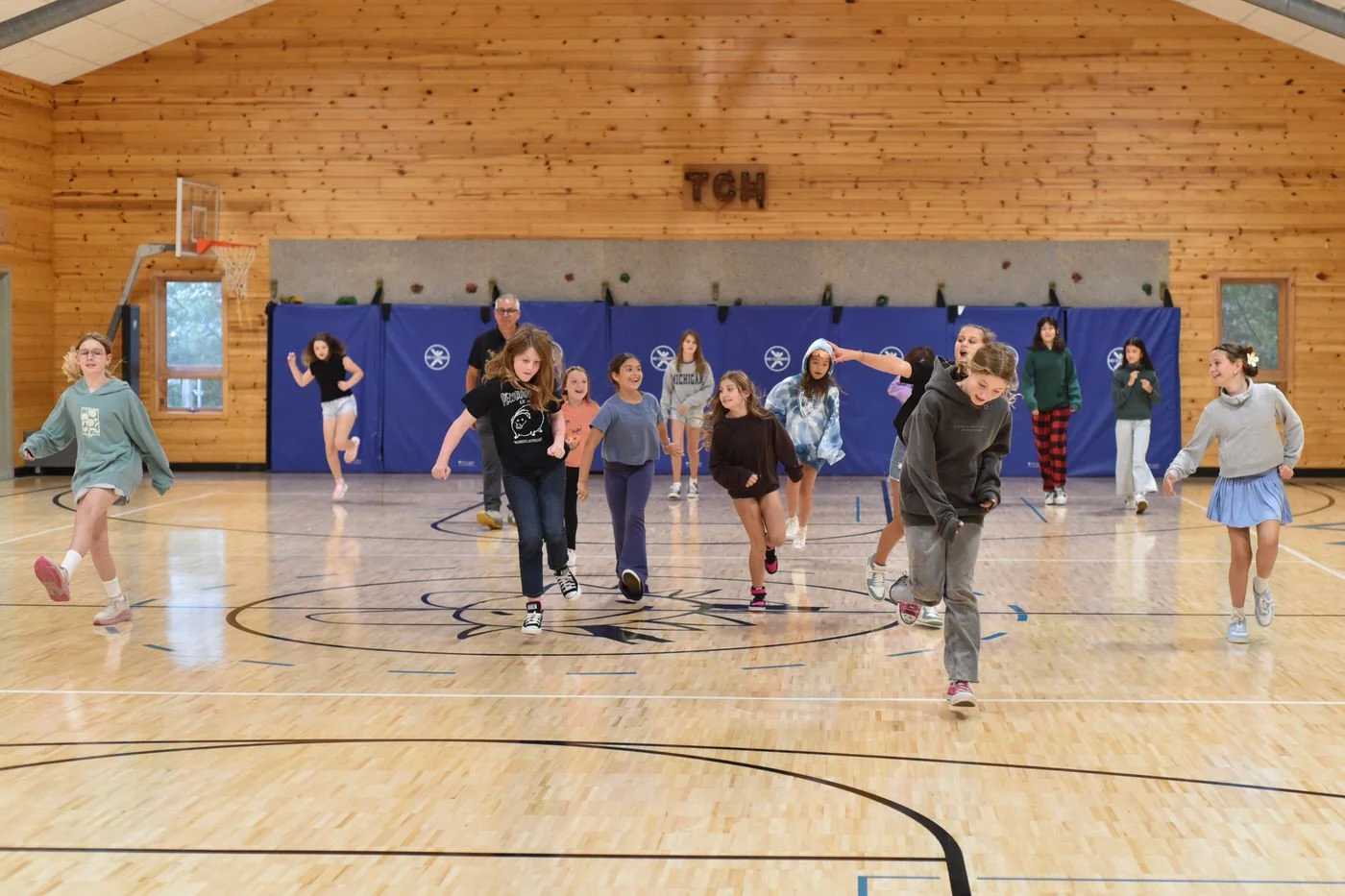
The goal of physical education is to develop physically literate individuals who have the knowledge, skills, and confidence to enjoy a lifetime of healthy physical activity. This is accomplished through thirty minutes of daily physical education for all learners in kindergarten through sixth year. The national standards are used as a guide in the development of games and activities.
Nutrition

Our food program is devoted to enhancing children’s health and wellness. We provide students with tasty, nutritious, sustainably sourced, and culturally diverse lunches. Because nutrition influences a child’s development, health status, and learning potential, we encourage healthy eating habits through meaningful interactions with food in the classrooms. We prioritize buying produce from neighboring farms, organic meats and dairy products, and whole-grain snacks.
Nido: Wellness
-
Positive social and emotional development during early childhood lays the essential foundation for lifelong learning and well-being.
Together, these skills are vital for healthy mental health and support children in navigating their world with confidence and empathy
Skills developing:
Eye contact
Self-Regulation
Co-Regulation
Setting and Maintaining Personal Boundaries (Giving and Receiving Consent)
Developing appropriate attachments
Naming and identifying emotions
Naming of anatomy
Verbalizing requests for consent
Modeling emotional regulation
Supporting various attachment styles
Gross motor opportunities
Breathing and meditation
The use of real, accurate, neutral words when speaking about bodily functions
-
All of a child’s movements and experiences give them an enormous amount of sensorial information; they acquire this information during the first three years of life and then categorize it from ages three to six.
Visual, auditory, tactical, gustatory (taste), stereognostic sensory, and olfactory (smell) experiences
Tracking moving objects without moving head
Raking grasp
Palmer grasp
Hands to mouth
Hand-to-hand transfer at the midline
Intentional grasp and release
Wrist flexion
Pointing
Primitive pincer grasp
Rolling
Sitting with and without support
Batting at objects
Crawling
Pulling to stand
Cruising and other attached walking
Standing independently
Walking
-
Self feeding
Positive relationship with food
PARENT SKILL: Support during transition to solids
Exposure to a variety of foods
Introduction of utensils
Adult modeling at mealtimes
Allowing children to develop their own preferences/opinions around food
Respecting the child’s individual hunger cues
YCC: Wellness
-
Positive social and emotional development during early childhood lays the essential foundation for lifelong learning and well-being.
Together, these skills are vital for healthy mental health and support children in navigating their world with confidence and empathy.
Skills:
Eye contact
Self-Regulation
Co-Regulation
Setting and Maintaining Personal Boundaries (Giving and Receiving Consent)
Developing appropriate attachments
Naming and identifying emotions
Naming of anatomy
Verbalizing requests for consent
Modeling emotional regulation
Supporting various attachment styles
Gross motor opportunities
Breathing and meditation
The use of real, accurate, neutral words when speaking about bodily functions
Opportunities for gross and fine motor movement throughout the day
Modeling grace, courtesy, and expression of needs and emotions
Supporting collaboration and independence
Opportunities to contribute to the needs of the community
Opportunities to care for oneself and the environment
Exposure to diversity, equity, inclusion, and belonging through classroom materials, activitie,s and conversations
-
Children are continuing to acquire sensorial information and beginning to refine motor development skills during their time in the YCC.
Skills:
Visual, auditory, tactical, gustatory (taste), stereognostic sensory, and olfactory (smell) experiences
Refined pincer grasp
Using hands together
All fingers working separately
Carrying
Running
Jumping
Brachiation
Pushing and pulling
Balancing
Dancing
Pedaling
Alternating arms and feet
Spatial awareness
Object permanence
-
Exposure to a variety of foods
Opportunities to bake, cook, and prepare food
The use of real, accurate, neutral words when speaking about body parts, bodily functions, and food
Allowing children to develop their own preferences/opinions around food
Respecting the child’s individual hunger cues
Opportunities for gross and fine motor movement throughout the day
Modeling grace, courtesy, and expression of needs and emotions
Supporting collaboration and independence
Opportunities to contribute to the needs of the community
Opportunities to care for oneself and the environment

Primary: Wellness
-
Self-Regulation
Co-Regulation
Naming and Identification of Emotions
Setting and Maintaining Personal Boundaries (Giving and Receiving Consent)
Respect for when another says “No”
Mindfulness
Empathy towards others, including neurodivergent learners
Social emotional literacy
Advocating for self and others
Time management
Becoming a self directed learner
Social connections
Care for community
-
Understanding health and fitness to develop physically literate children who gain confidence to enjoy a lifetime of physical activity
Developing physical confidence through motor skills, movement patterns, concept strategies and tactics like offense and defense, gaining a knowledge of nutrition, personal and social responsibility by following rules and having strong communication, and recognizing the value of physical activity
-
Classroom baking and cooking
Exposure to a variety of foods
The use of real, accurate, neutral words when speaking about body parts, bodily functions, and food
Allowing children to develop their own preferences/opinions around food
Respecting the child’s individual hunger cues
Modeling grace, courtesy, and expression of needs and emotions
Supporting collaboration and independence
Opportunities to contribute to the needs of the community
Opportunities to care for oneself and the environment
Lower Elementary: Wellness
-
Recognizes and labels emotions: Children understand different feelings and can connect them to their own behaviors and those of others.
Controls impulsive behavior: They develop the ability to pause, think, and choose thoughtful responses rather than reacting impulsively.
Responds thoughtfully vs. reacting: Children learn to manage their emotions by responding calmly and appropriately to challenging situations.
Engages in classroom community: Actively interacts with peers and adults, contributing positively to the social environment.
Builds social awareness: Develops skills to navigate relationships, understand social cues, and cooperate within group settings.
Learn about brain development
Begin early, age-appropriate, discussions on human growth and development
Practice gratitude
-
Understanding health and fitness to develop physically literate children who gain confidence to enjoy a lifetime of physical activity
Developing physical confidence through motor skills, movement patterns, concept strategies and tactics like offense and defense, gaining a knowledge of nutrition, personal and social responsibility by following rules and having strong communication, and recognizing the value of physical activity
-
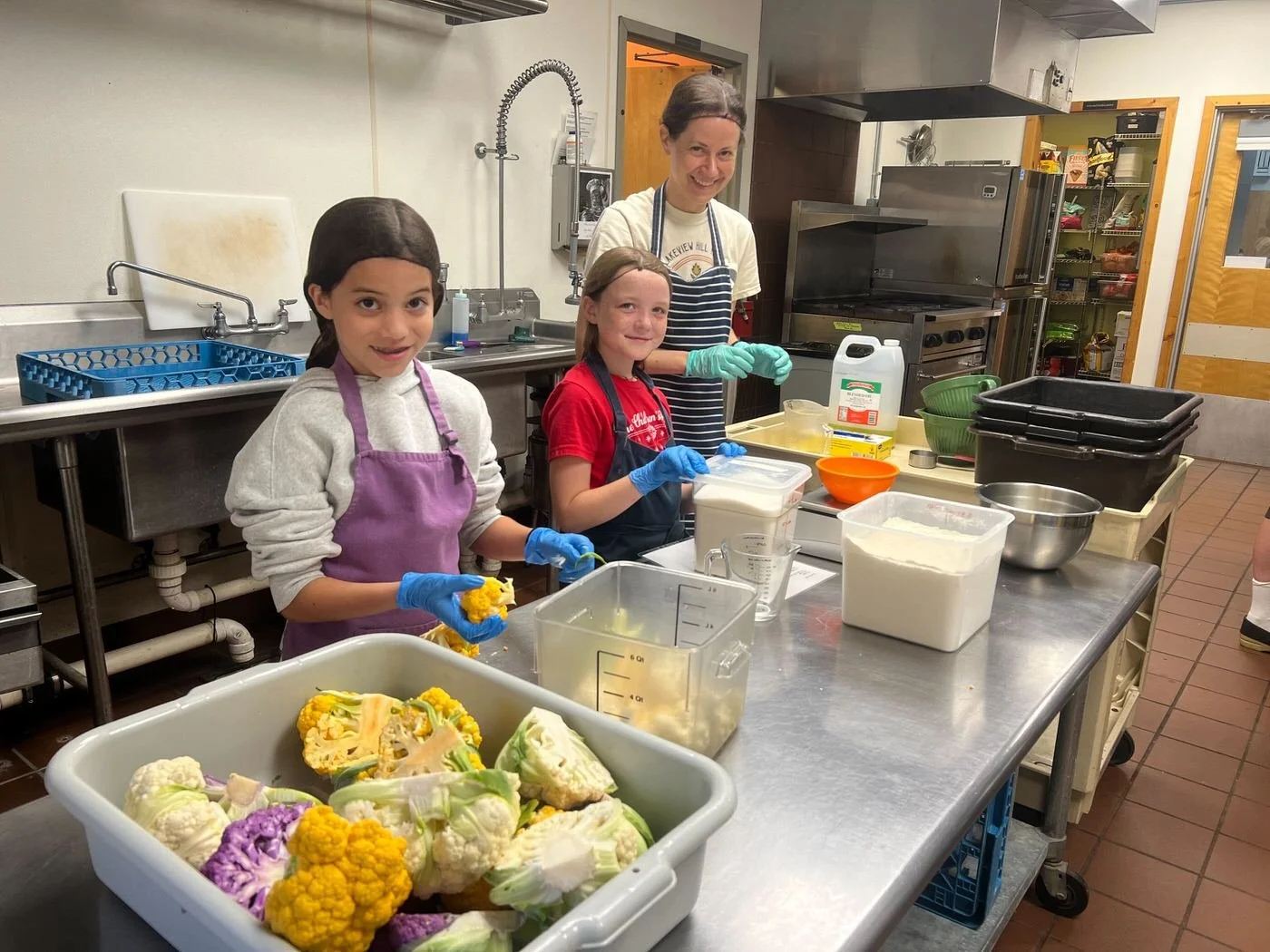
Developing skills to build a relationship with food, including preparation, propagation, and harvesting
Practice kitchen and food practices, including hygiene and safety, food preparation, reading recipes, measuring and mixing, nutrition, food as culture, food origins, beginner gardening, seed planting, and harvesting

Upper Elementary: Wellness
-
Identifies a broad range of emotions: Children can describe various feelings and understand the situations that trigger them.
Expresses emotions appropriately: They learn and demonstrate socially acceptable ways to show feelings, whether verbally, through body language, or other outlets.
Builds and nurtures peer relationships: Actively engages with friends and peers, fostering positive, supportive social connections.
Develops empathy and social skills: Gains a deeper understanding of others’ feelings and perspectives, improving cooperation and communication.
Learn about brain development
Learn about human growth and development with age-appropriate discussions and factual information
Practice gratitude
-
Understanding health and fitness to develop physically literate children who gain confidence to enjoy a lifetime of physical activity
Developing physical confidence through motor skills, movement patterns, concept strategies and tactics like offense and defense, gaining a knowledge of nutrition, personal and social responsibility by following rules and having strong communication, and recognizing the value of physical activity
-
Developing skills to build a relationship with food, including preparation, propagation, and harvesting
Practice kitchen and food practices, including hygiene and safety, food preparation, reading recipes, measuring and mixing, nutrition, food as culture, food origins, beginner gardening, seed planting, and harvesting
Junior High: Wellness
-
Analyzing stress and motivation: Teens begin to identify factors that cause stress or drive successful performance in school, activities, and life.
Applying coping strategies: Learns and practices effective methods to manage stress and sustain motivation toward goals.
Maintaining and fostering relationships: Understanding how to build, maintain, and repair healthy relationships, including recognizing and navigating ruptures.
Developing conflict resolution skills: Gaining tools to resolve disagreements constructively and communicate effectively to restore connections.
Enhancing social understanding: Deepening awareness of self and others to nurture empathy and mutual respect in relationships.
Understanding human growth and development through education covering physical changes, gender and sexual identity/expression, and reproductive health
Learning about brain development and function
Practicing gratitude
Recognizing and building appreciation for one’s own unique contributions to the social whole.
-
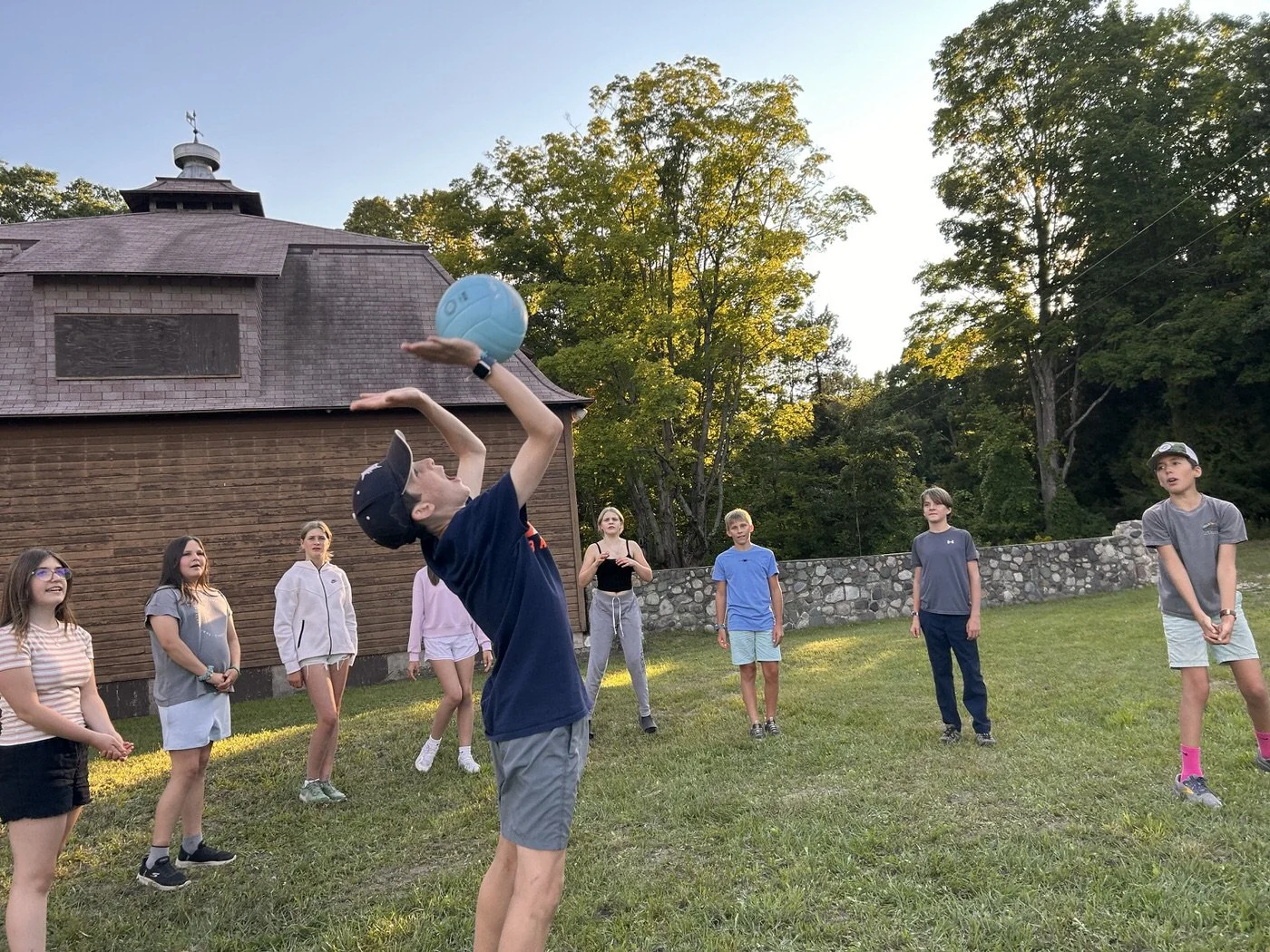
Finding enjoyment in group physical activities, toward an active lifestyle for a lifetime.
Developing personal and social responsibility and communication skills through self-organized play.
Nurturing self-confidence and building stamina by persevering through the physical challenges of travel, including the culminating backpacking trip.
-
Developing skills to build a relationship with food, including planning and preparation.
Practicing kitchen and food practices, including hygiene and safety, reading recipes, measuring and mixing, nutrition, food as culture, food origins, food distribution systems, and growing practices.
Related Content
-
![]()
Our Programs
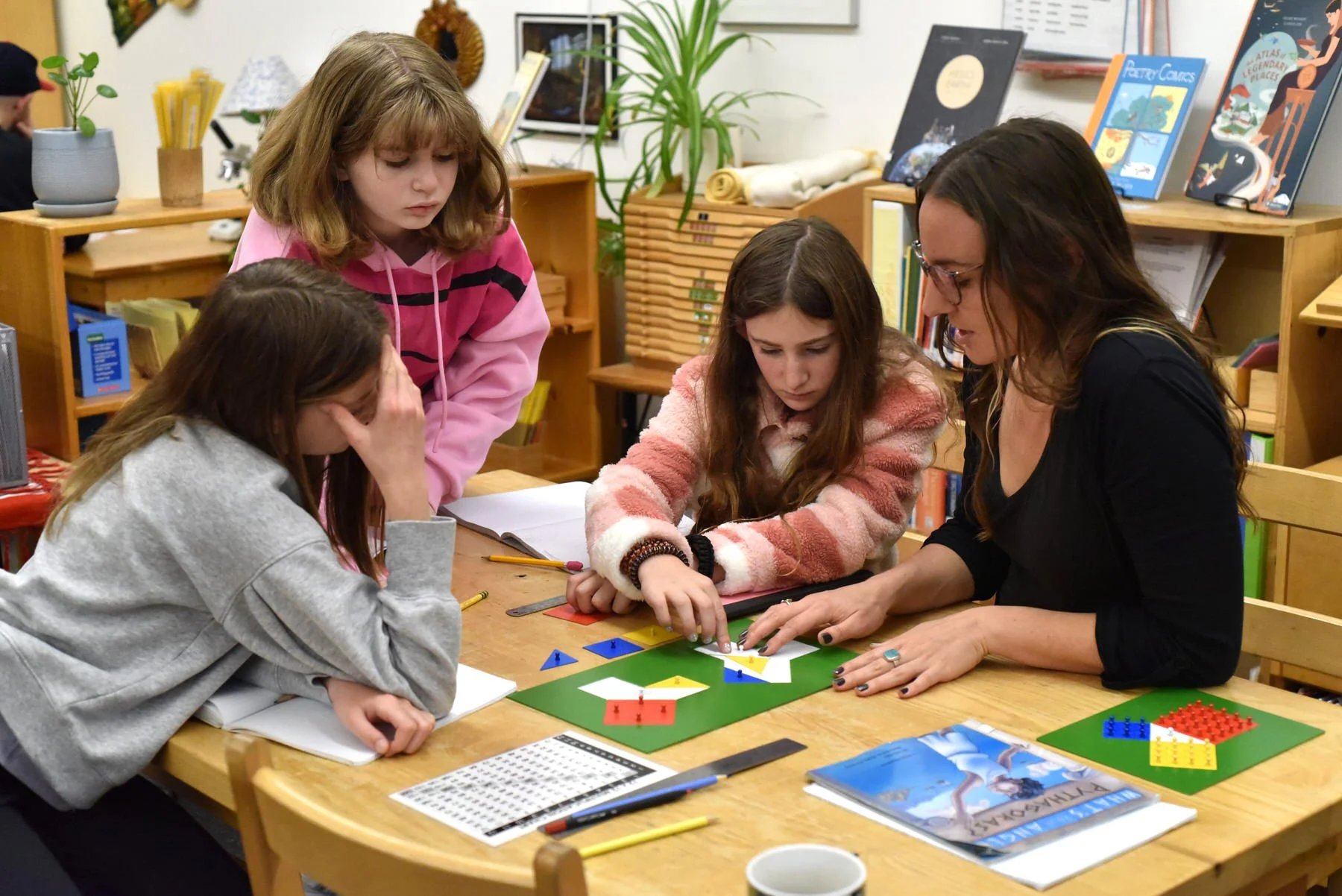
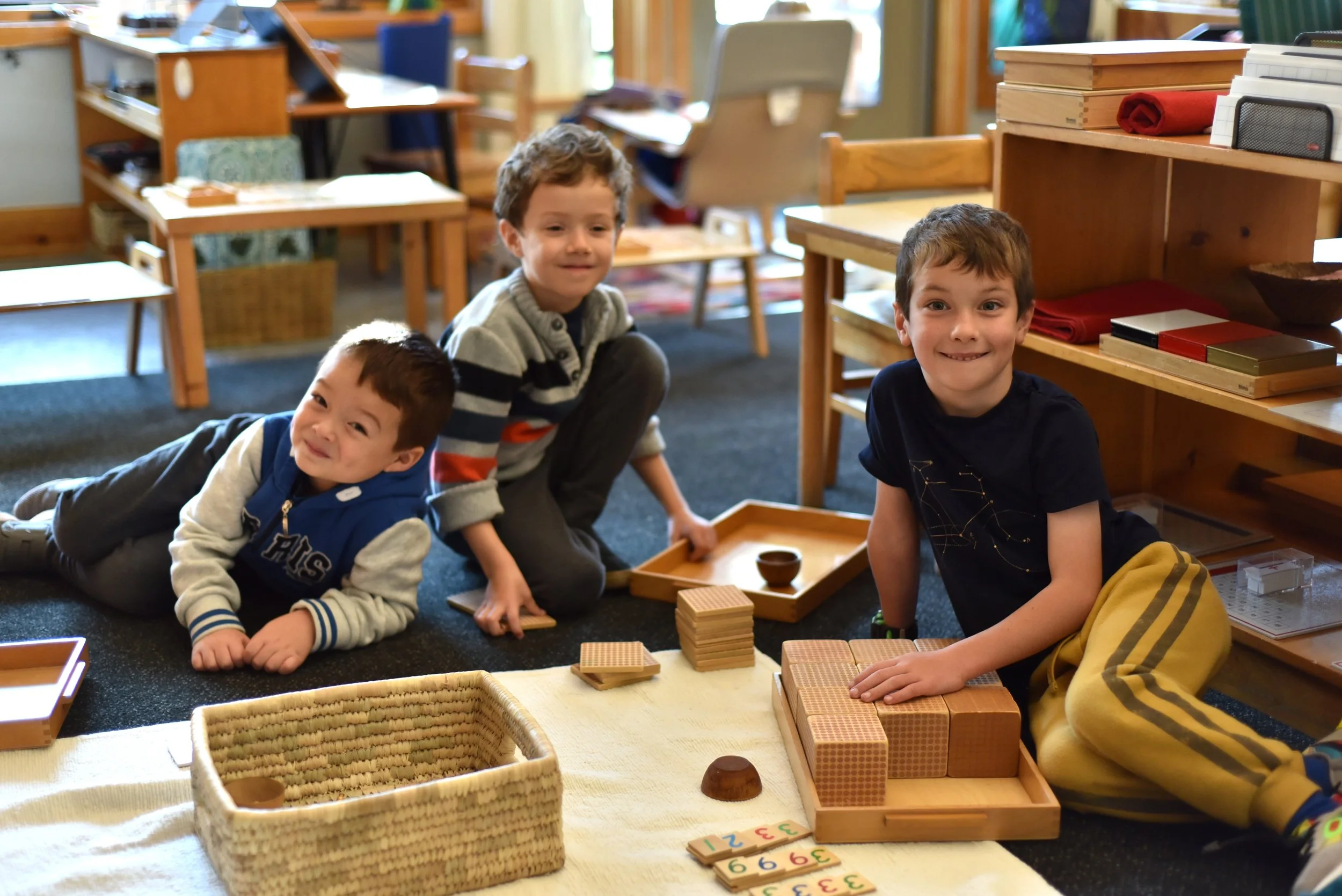
Montessori education at The Children's House guides and celebrates the development of independent and responsible young people. To learn about the curriculum and prepared Montessori environments of our classrooms, please read about our programs for children from infancy through the adolescent years.
-
![]()
Our Alumni
At The Children’s House and Compass Montessori Junior High, we harness curiosity and discovery to inspire learning. As a result, our graduates are intrinsically motivated learners, critical thinkers, and strive for academic excellence.
-
![]()
Our People
Being a prepared adult in a Montessori classroom is more than setting up materials and managing schedules. The adults in the classroom understand child development and know how to meet each child where they are. They act as a connection to the environment, observing each child’s interests and progress and fostering curiosity and a joy of learning through purposeful work.